21.9.1 Aniline synthesis to set up the Sandmeyer reaction
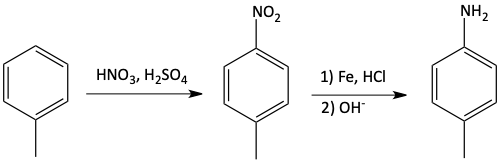
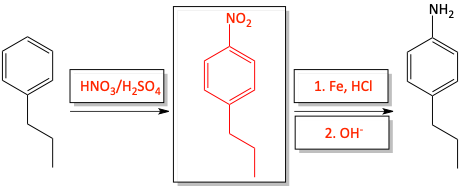
We have already learned how to nitrate an aromatic ring with nitric and sulfuric acid. A reduction of a nitro group on an aromatic ring to an amino group with fewer nitrogen-oxygen bonds is accomplished by reducing it with iron filings and hydrochloric acid followed by hydroxide. The meta-directing nitro group is now an o,p-directing amino group. Remember that aminobenzene is commonly called aniline.
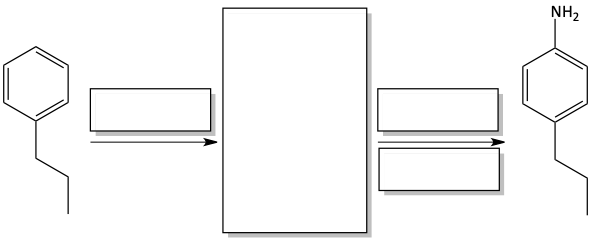
9. Show the two reaction steps needed to turn propyl benzene into 4-aminopropylbenzene.
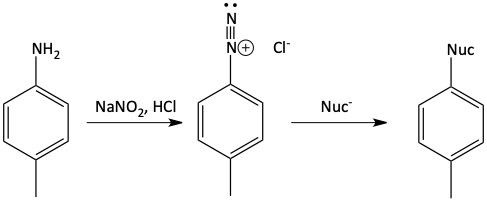
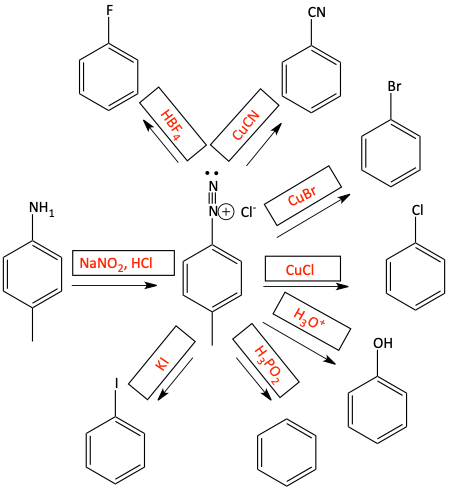
Amino groups on an aromatic ring can be turned into the world’s greatest leaving group, N2, by reacting it with sodium nitrite (NaNO2) and HCl. Once this happens, the leaving group is so good, it is only stable below 10°C. It can be replaced with many different types of nucleophiles.
The substitution reaction is called a Sandmeyer reaction if the nucleophile is a Cu+ salt like cuprous cyanide (CuCN), cuprous chloride (CuCl), or cuprous bromide (CuBr).
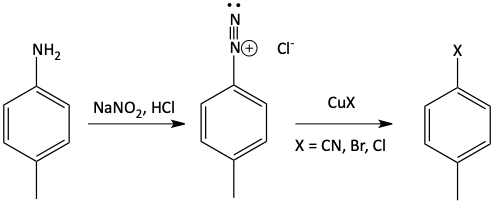
Sandmeyer Reaction
Many different nucleophilic substitutions can occur. With acid and water, we get a phenol. With HBF4, we get an aromatic fluoride. With potassium iodide (KI), we get an aromatic iodide. With hypophosphorous acid (H3PO2), the N2 is replaced with a proton to reform the benzene ring.
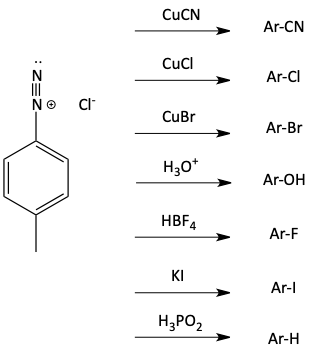
10. Write in the reagents to complete the following Sandmeyer and Sandmeyer-like reactions.
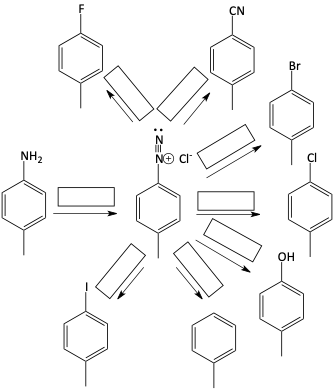
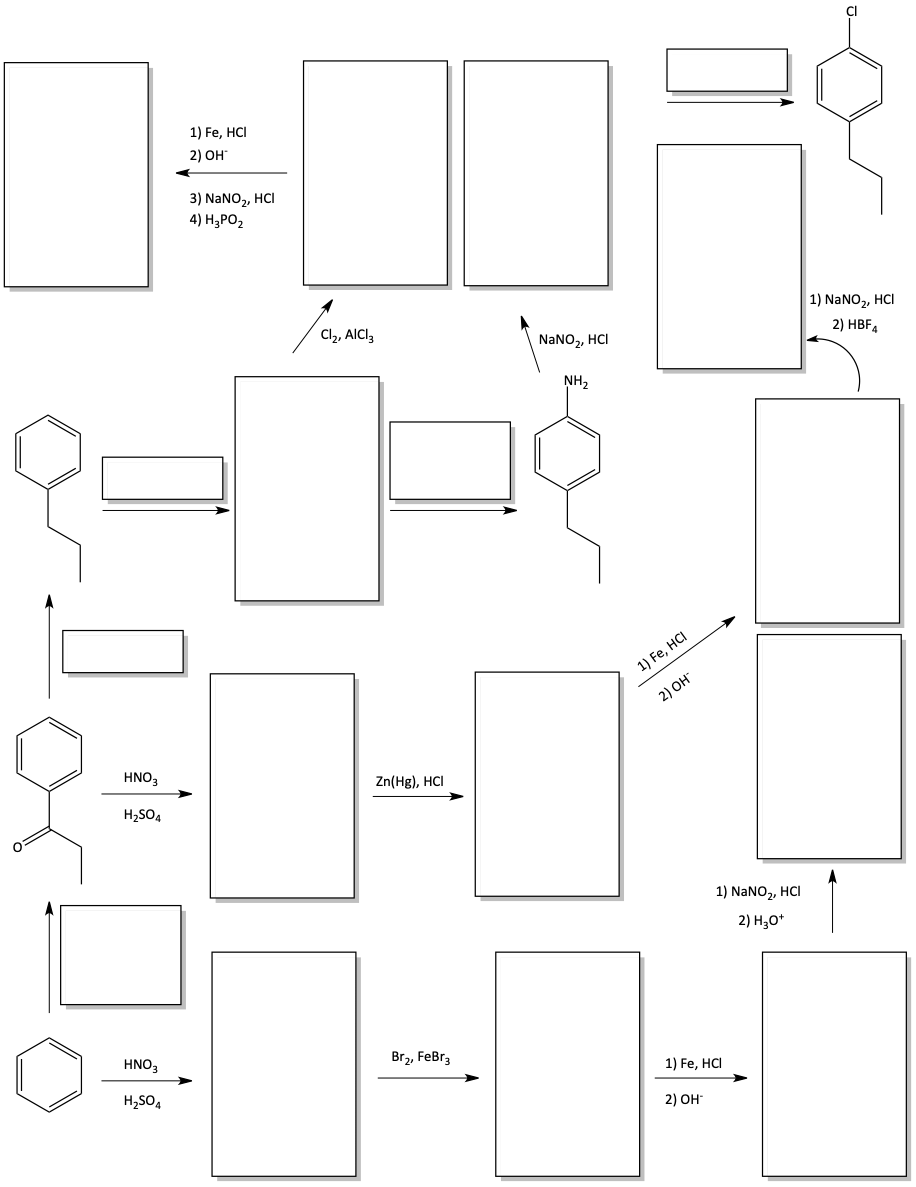
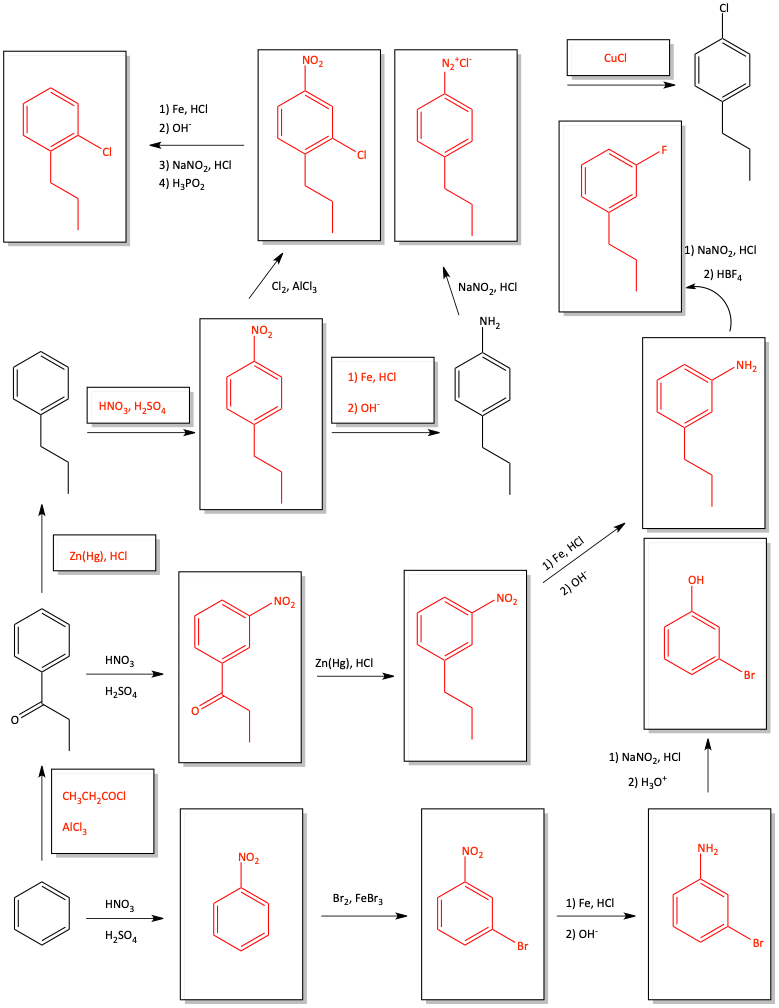
11. Draw in all reagents and products in the following reaction sequence. Pay careful attention if groups are ortho-para directing or meta-directing. Notice how groups sometimes direct to one location and then are changed into a different type of directing group.