21.3 Activating Groups
21.3.1 Alkyl groups
Activated
Let’s look at the nitration of benzene compared to the nitration of toluene. Toluene is methyl benzene. We find that the nitration of toluene occurs faster than it does on benzene, 25 times faster. The methyl group makes the reaction go faster. We say that the methyl group, as well as other alkyl groups, is an activating group. Activating groups make aromatic reactions proceed faster.
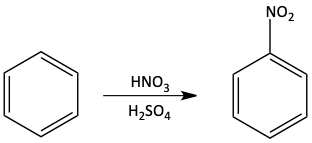
Nitration of benzene
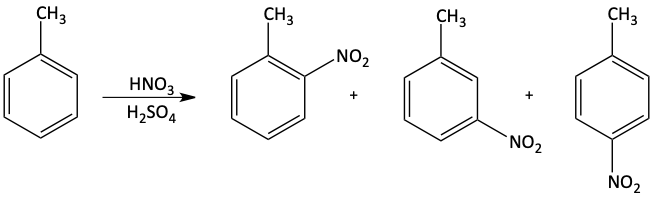
Nitration of toluene (occurs 25 times faster)
Ortho/Para Directing
When toluene is nitrated, the nitro group can go on ortho, meta, or para positions. If the process was totally random, we would expect ortho:meta:para isomers in a 2:2:1 ratio.
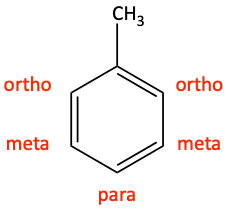
We find that much more of the ortho and para isomers are made with very little of the meta isomer being formed. We say that the methyl group, like other alkyl groups, is ortho-para directing.
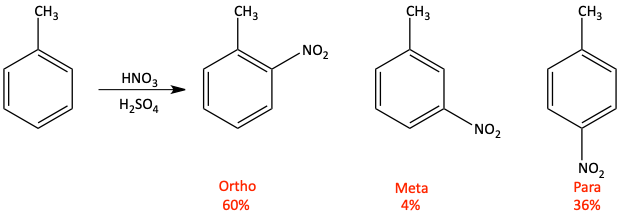
The reason methyl and other alkyl groups are activating (making the reaction go faster) and ortho-para directing can be explained by looking at the mechanism of the nitration. When benzene reacts with the nitronium ion, the sigma complexes are all secondary cations.
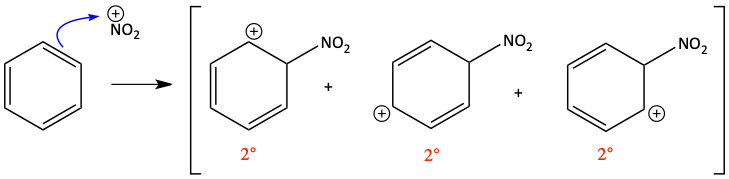
When toluene is nitrated, we get sigma complexes that are both tertiary and secondary carbocations. Because tertiary carbocations are lower in energy (more stable) than secondary carbocations, reactions that make tertiary carbocations proceed faster than those that only make secondary carbocations. This is why the toluene reactions are activated. Notice that only the nitration at the ortho and para sites produce tertiary carbocation sigma complexes. This is why methyl and other alkyl groups are ortho-para directing.
Ortho attack
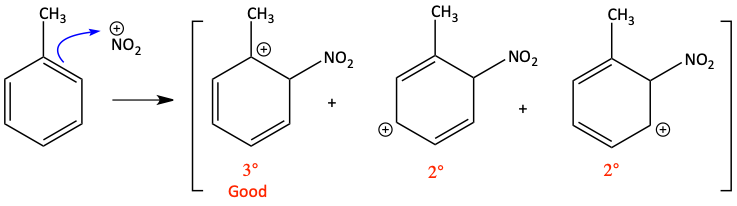
Nitration at ortho site gives tertiary carbocation
Meta attack
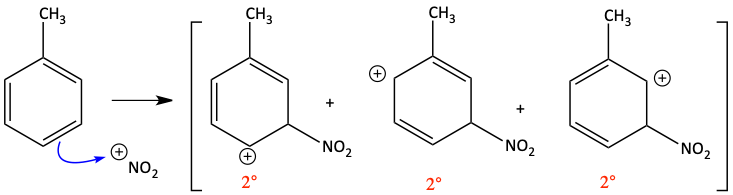
Nitration at meta site gives only secondary carbocations
Para attack
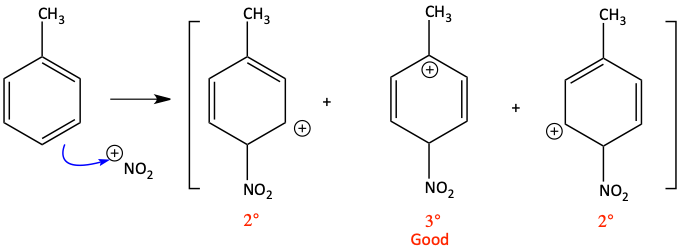
Nitration at para site gives tertiary carbocation
21.3.2 Alkoxy and amino groups
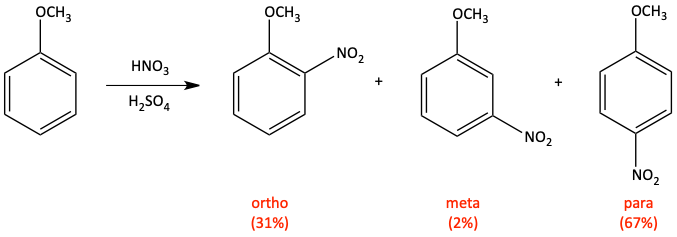
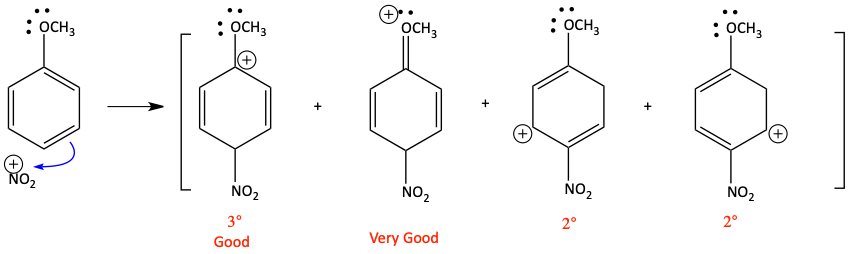
Alkoxy (-OR) and amine (-NR2) groups are even more activating than alkyl groups. The nitration of anisole (methoxy benzene) reacts 10,000 times faster than the nitration of benzene.
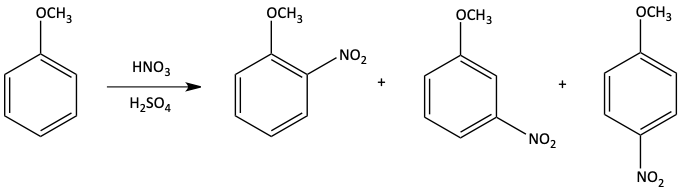
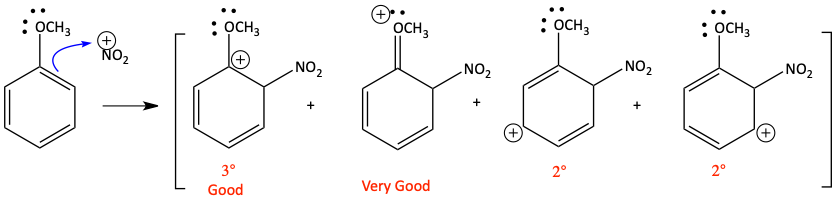
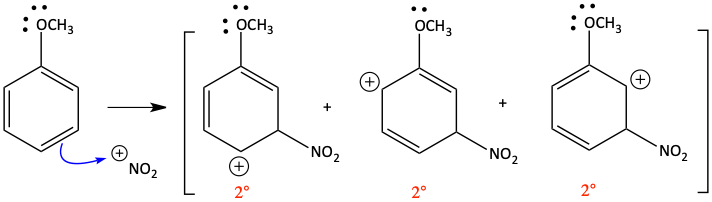
This fast nitration with alkoxy or amino groups is because carbocations that are formed in these sigma complexes are further stabilized through resonance. Also, when the nitration occurs at the ortho or para sites, this resonance-stabilized carbocation is formed but when the attack is at the meta site, no very good resonance stabilized sigma complexes are formed. For this reason, alkoxy and amino groups are ortho-para directing.
Ortho attack
Meta attack
Para attack
Alkoxy and amino groups are such excellent activating groups, that anisole and aniline can be brominated with bromine. The reaction doesn’t stop after one bromination. But, all of the ortho and para positions can be brominated.
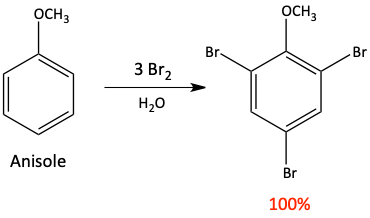
Bromination of anisole
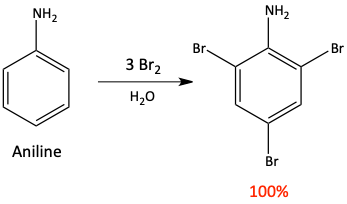
Bromination of aniline
The following chart shows the ranking of the activity of activating groups. The more electron donating the group, the more activating it is.

2. Draw the products of the following reactions.
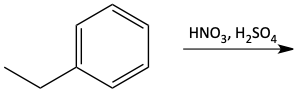
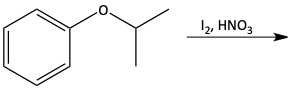
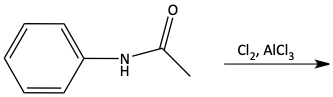
2.


