21.4 Deactivating Groups
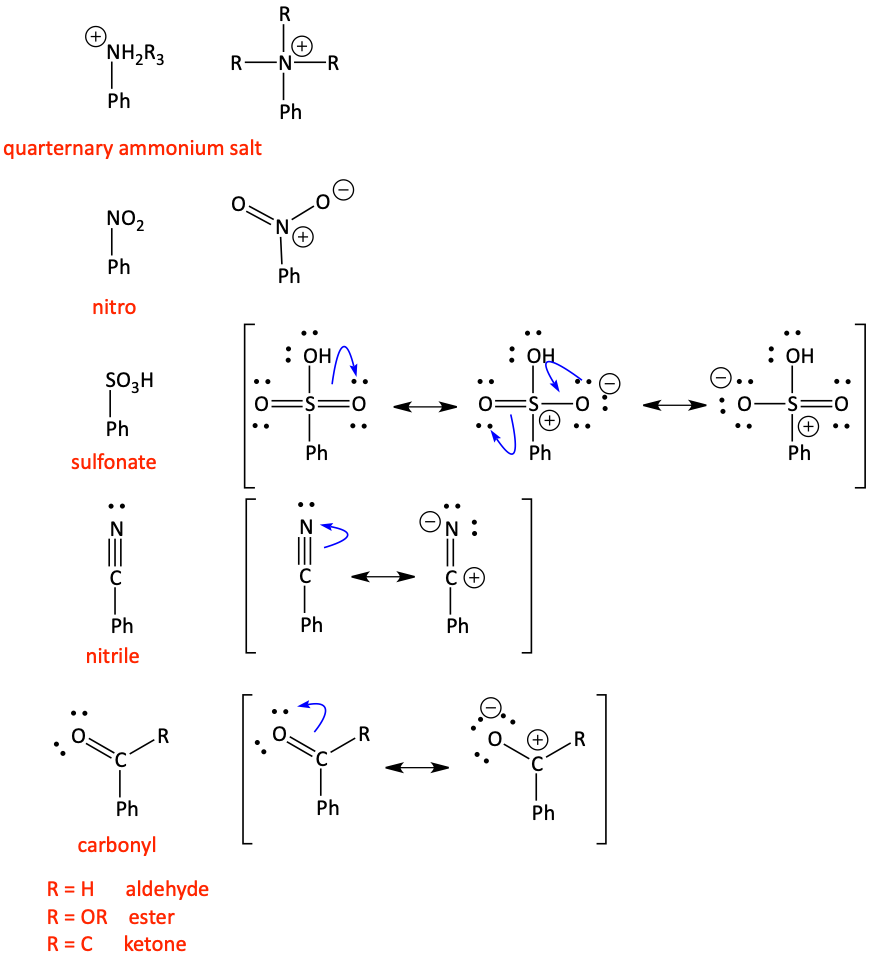
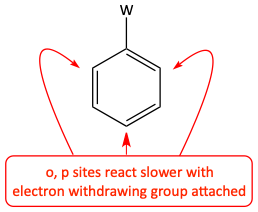
Electron-donating groups are activating and ortho-para directing. If a group on an aromatic ring is an electron-withdrawing group, it has the opposite effect. Because electron-withdrawing groups suck electron density out of the aromatic ring, the ring is much slower to react. Therefore, an electron-withdrawing group slows down electrophilic aromatic reactions. A nitro group is an electron-withdrawing group. It is deactivating. While electron-donating activating groups make the ortho-para sites more reactive, electron-withdrawing deactivating groups make the ortho-para sites less reactive. Because the ortho-para sites are less reactive, we get more of the meta product. Deactivating groups are meta directors.
The nitration of nitrobenzene is 100,000 times slower than the nitration of benzene. It is deactivated. The nitration of nitrobenzene gives a majority of the meta product.
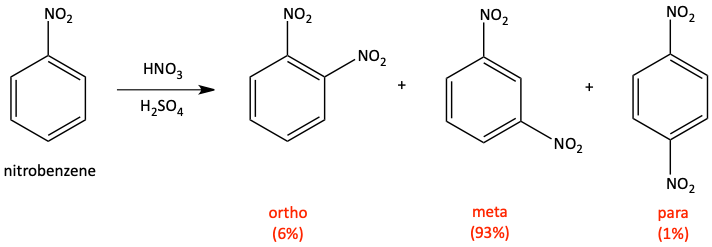
The nitration of nitrobenzene is 100,000 times slower than the nitration of benzene. It is deactivated. The nitration of nitrobenzene gives a majority of the meta product.
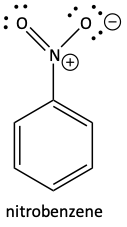
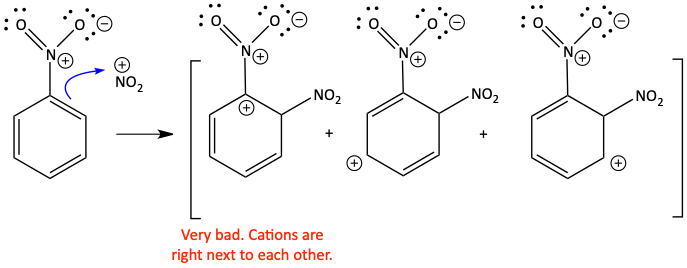
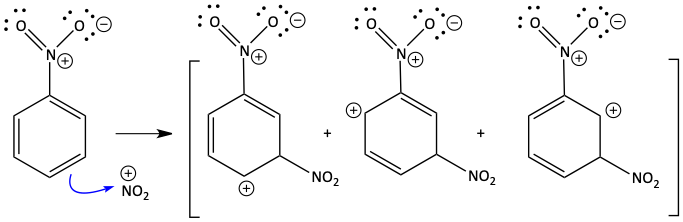
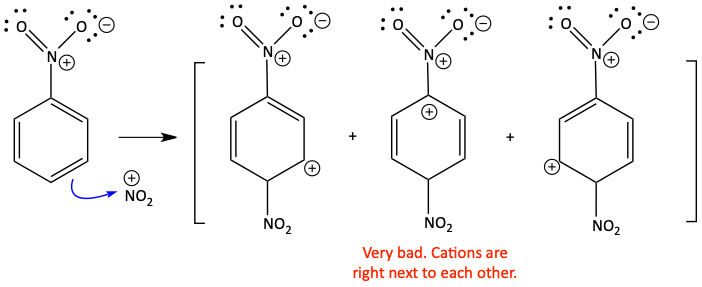
If we analyze the mechanism of electrophilic substitution on nitrobenzene, we can see why ortho and para substitution is less desirable. When ortho or para attacks happen, we get the bad situation where two positive charges next to each other.
Ortho attack
Meta attack
Para attack
Carbonyl groups are also meta-directing deactivating groups. This is because the carbon atom of a carbonyl has a partially positive charge.
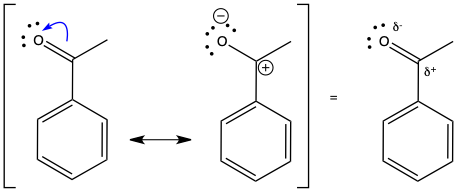
In summary, electron withdrawing, meta-directing, deactivating groups all carry at least a partial positive charge. The more positive the group is, the more deactivating it is.