11.20 Ozonolysis
11.20.1 Of alkenes
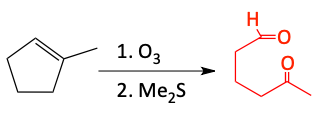
Ozonolysis is very similar to oxidation by KMnO4 in warm, concentrated solution. The difference is that if an aldehyde is formed, it is not further oxidized to a carboxylic acid. Notice that in this oxidation, two carbon- carbon bonds of the alkene turn into two carbon-oxygen bonds of the carbonyl.
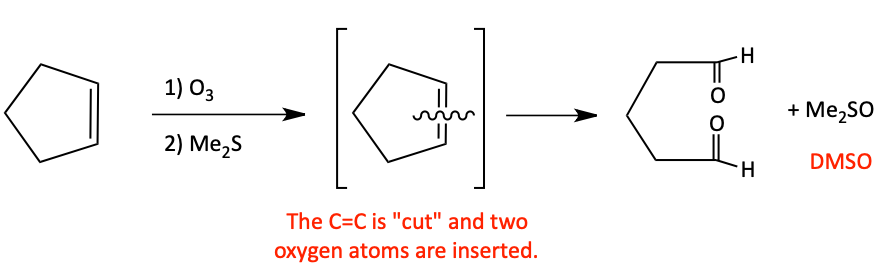
The mechanism for this reaction does not really help us learn the reaction. If you are interested in it, you can look it up elsewhere. Ozone is a compound with three oxygen atoms (O3). Two of the three oxygen atoms are in the final product. The third oxygen atom ends up on the Me2S to make Me2SO.
11.20.2 Of alkynes
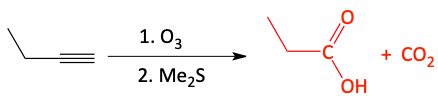
The reaction of an alkyne with ozone results in the same products as the full oxidation with KMnO4 under basic, hot conditions. The carbon-carbon triple bond is cleaved and each carbon atom is fully oxidized resulting in two carboxylic acids. Again, notice that in this oxidation, three carbon-carbon bonds of the alkyne turn into three carbon-oxygen bonds of the carboxylic acid.

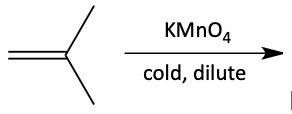
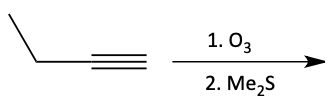
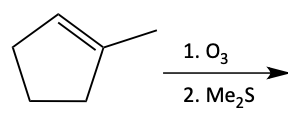
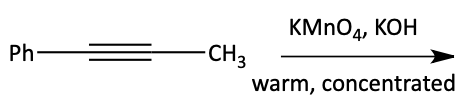
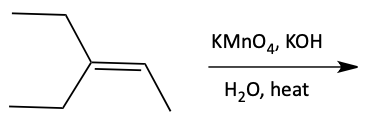
10. Draw the products of the following reactions.