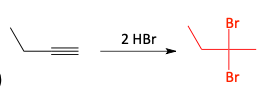
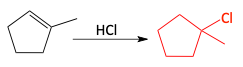
11.2 Markovnikov Hydrohalogenation
11.2.1 Of an alkene
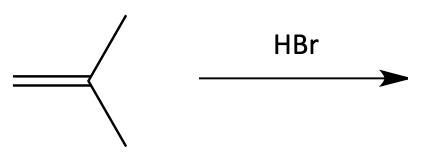
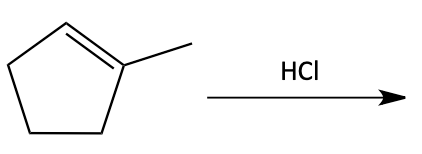
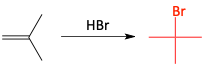
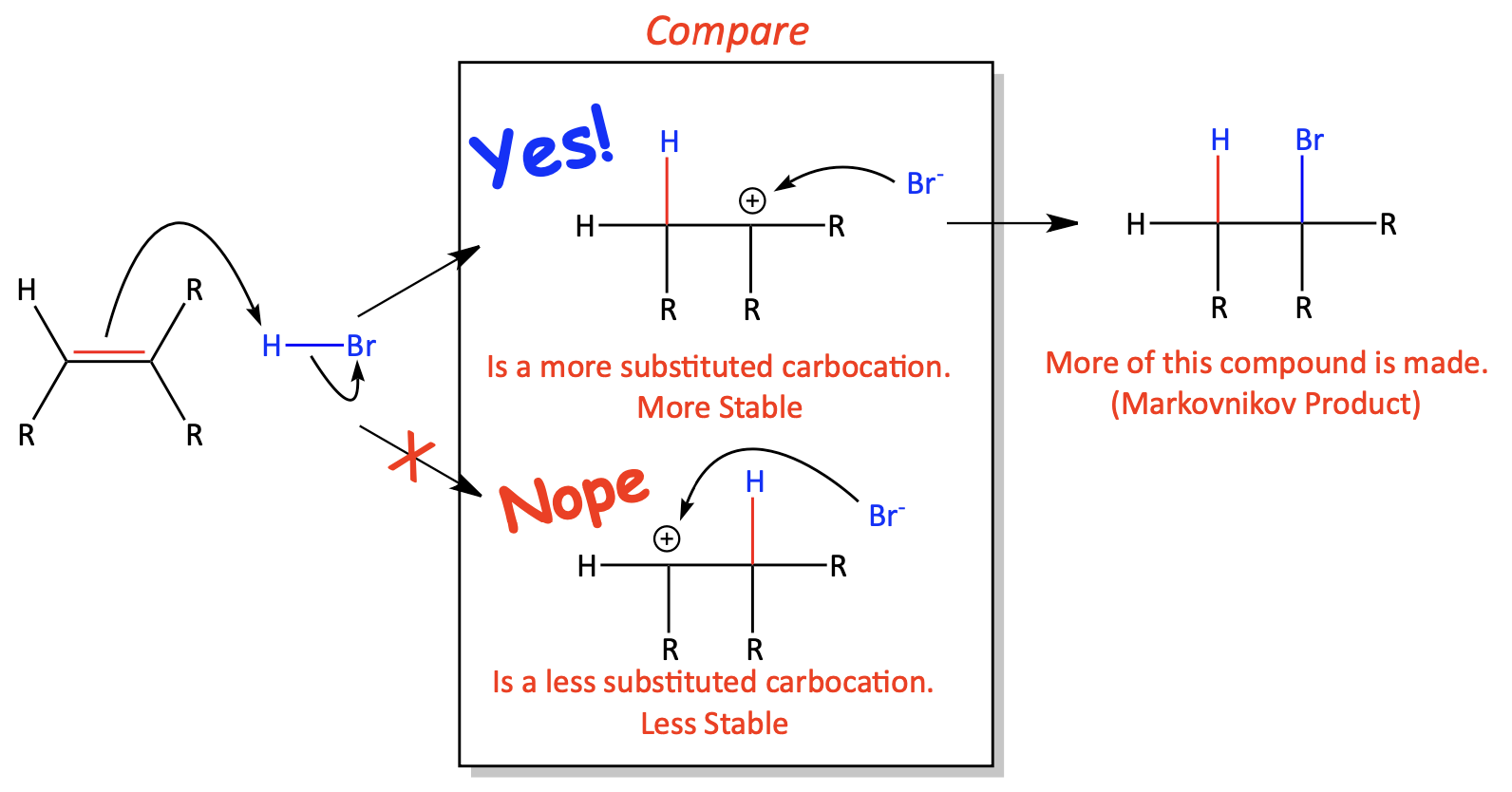
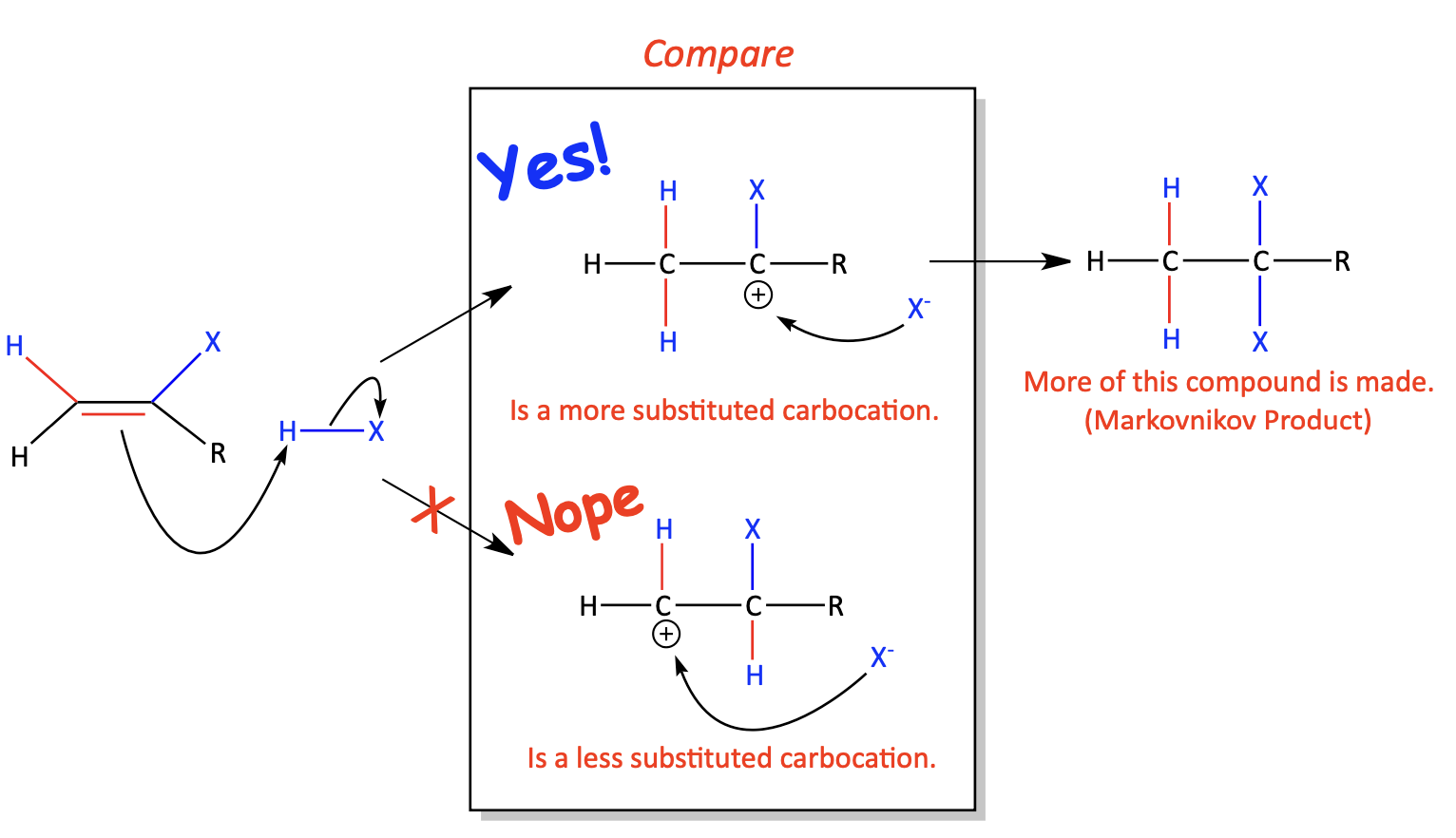
The addition of hydrogen halide, HBr, HCl, HI, is a regiospecific reaction. One of the two possible orientations is favored. Vladimir Markovnikov, a Russian chemist, noticed this preference for one regioisomer over the other. In 1869, Markovnikov wrote how to predict which regioisomer is favored. He wrote, when H-X is added to an alkene, the hydrogen atom adds to the carbon atom of the double bond that starts with more hydrogen atoms on it. Another way to think about it is the “special group”, the non-hydrogen group, is added to the more substituted carbon atom of the double bond (the carbon atom with the most R groups). Reactions that follow this rule are called Markovnikov reactions. The products of these reactions are Markovnikov products. Although Markovnikov wrote his rule for hydrogen halide reactions of alkenes, chemists today use this rule for any reactions that add a hydrogen atom to one side of an alkene and a different group to the other carbon atom of the alkene. Why does Markovnikov’s rule work? For the reaction of H-X, the more substituted carbocation is lower in energy. Its pathway is easier to follow, resulting in more of the Markovnikov product, where the special group is on the more substituted carbon atom (where the carbocation was).Markovnikov’s rule is not always followed. Sometimes what appears to be the wrong product, the anti- Markovnikov product, is formed. But, in these instances, the more stable intermediate is still the one whose path is followed. This idea, where the more stable intermediate is the path that is followed more, is ALWAYS obeyed.
11.2.2 Of an alkyne
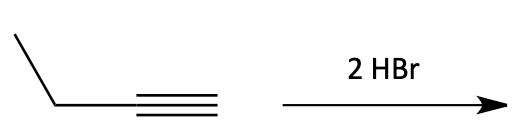
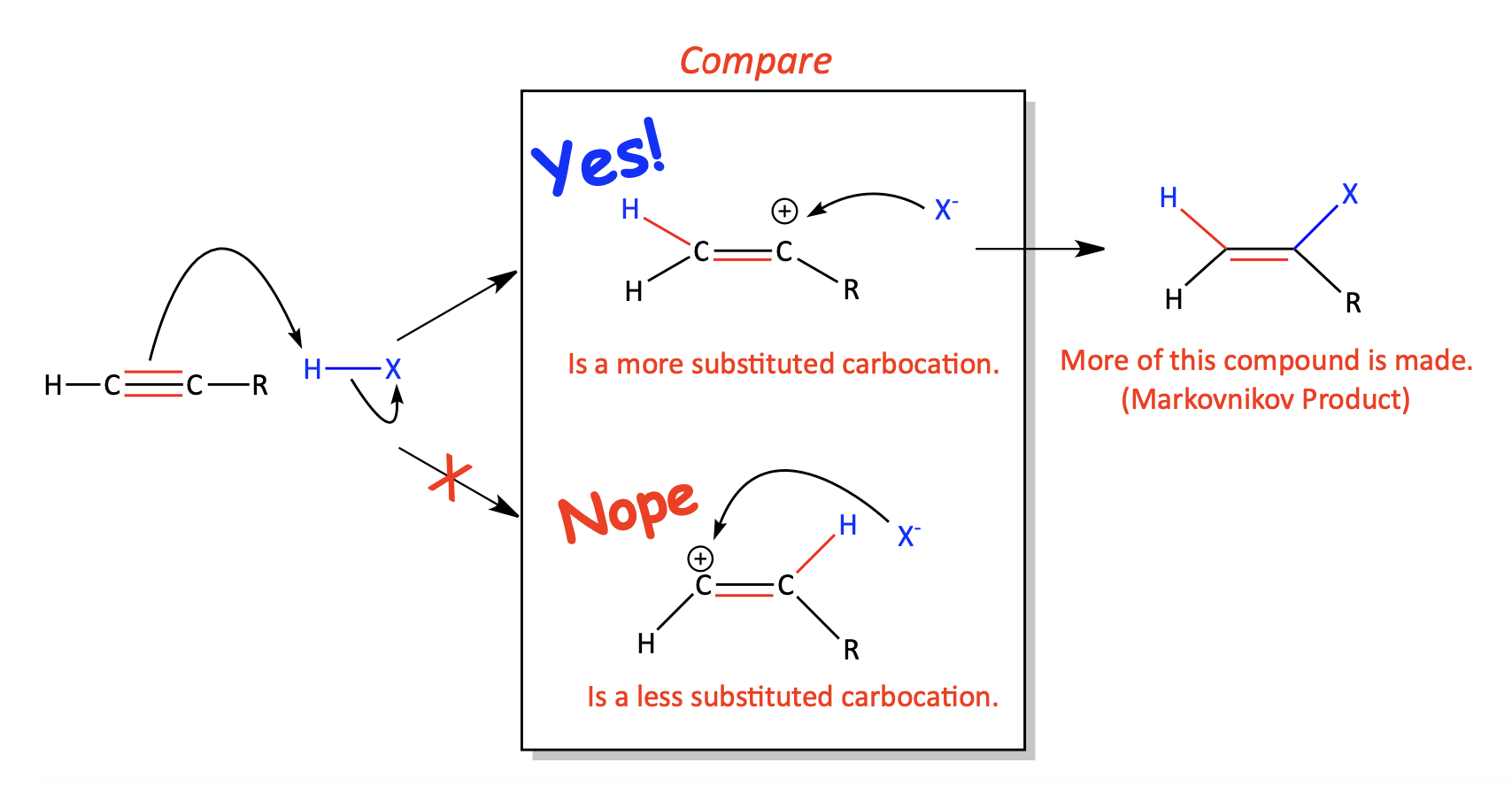
The same reaction can be performed on an alkyne. But, since an alkyne contains two pi-bonds, the reaction with H-X (HCl, HBr, or HI) can occur twice. If a terminal alkyne is a reactant, a Markovnikov product is made. Mechanism1. Addition to first pi-bond.
2. Addition to second pi-bond.
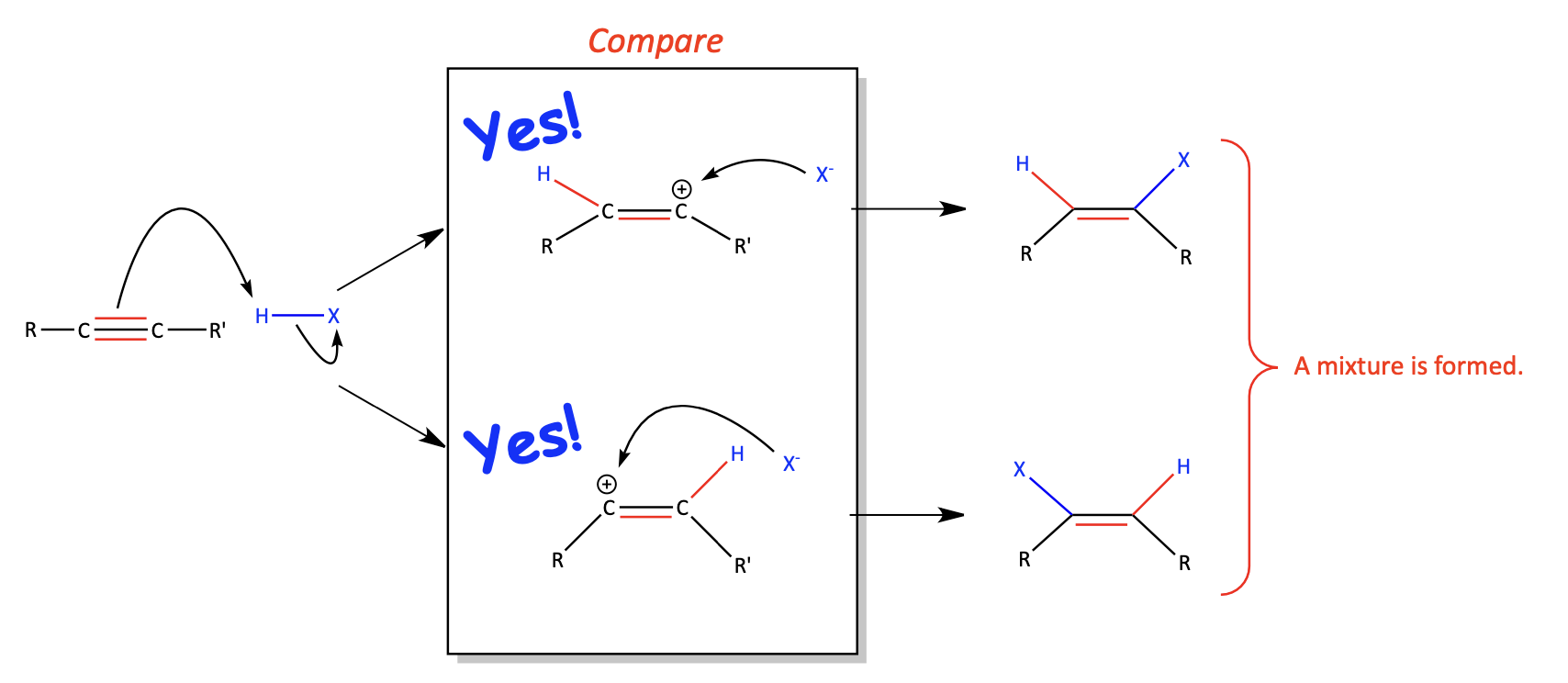
If an internal alkyne is a reactant, it doesn’t matter which side the hydrogen adds. Both are equally stable. Therefore, a mixture of products is formed.
1. Draw the product of the following reactions.