
20.5 Identifying if aromatic, antiaromatic, or nonaromatic
4N+2, Hückel’s rule
Aromatic systems are cyclic, completely conjugated systems that are more stable than their open-ring counterparts. Antiaromatic systems are cyclic, completely conjugated systems that are less stable than their open-ring counterparts. In order for a system to be aromatic or antiaromatic, it MUST have the following characteristics.
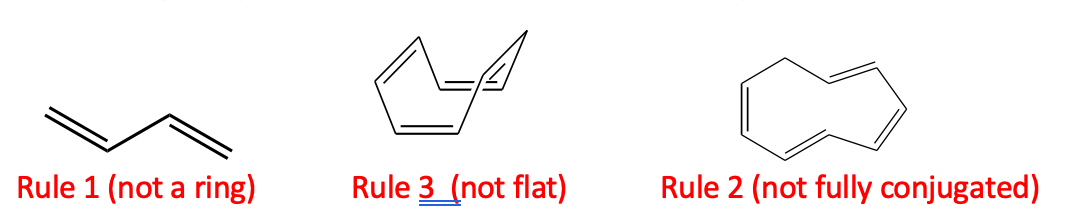
1. It must be a cyclic compound. If it is not a ring, it is neither aromatic nor antiaromatic. 2. It must be completely conjugated at every atom in the ring. Each atom of the ring must have an unhybridized p-orbital that can overlap. 3. The ring must be a flat, planar structure. All of the p-orbitals must be able to overlap with each other so the pi-electrons can be shared.
If any of the three above considerations is not true for a compound, then the compound is a nonaromatic system.
3. Each of the following compounds is nonaromatic. Which of the previous rules, 1-3, does each compound break?

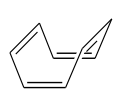
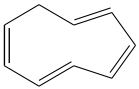
3. Each of the following compounds is nonaromatic. Which of the previous rules, 1-3, does each compound break?
4. For the following compounds, determine whether the molecule is aromatic, antiaromatic, or nonaromatic. Assume the molecules are planer.

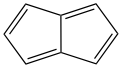

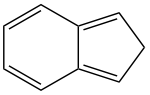
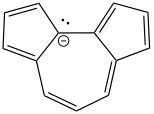
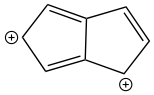
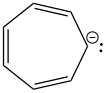

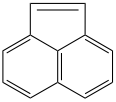
4. a) aromatic b) antiaromatic c) antiaromatic d) nonaromatic e) aromatic f) aromatic g) antiaromatic h) nonaromatic i) antiaromatic
5. Predict whether the following compounds would be flat (planar) or not.
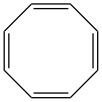
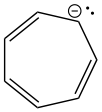
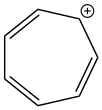

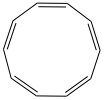
5. a) no b) no (a and b would be antiaromatic if flat) c) yes d) yes e) yes (c, d, and e would be aromatic if flat.)