20.13 Extra Problems
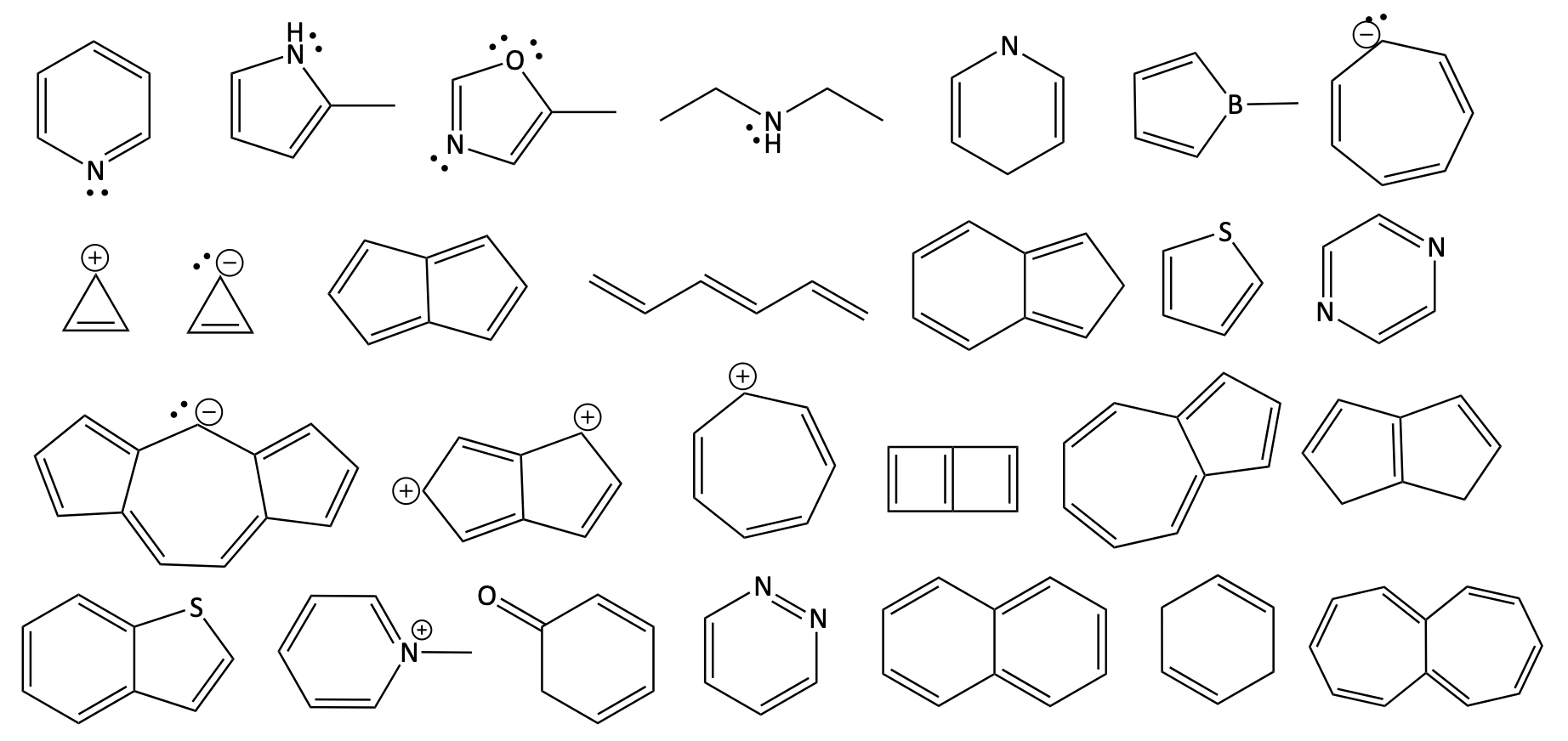
9. Assuming they are planar, label each of the following compounds/ions as aromatic, antiaromatic, or nonaromatic.
10. Is cycloheptatrienyl cation a planar ion? Explain.
11. Draw the following compounds. a) p-xylene
b) toluene
c) o-cresol
d) benzoic acid
e) benzaldehyde
f) aniline g) o-ethoxytoluene
h) m-nitroanisole
i) p-nitroaniline
j) 3-chlorostyrene
k) 2,3-dimethylphenol l) 3-aminobenzoic acid
m) 2-methylpyrrole
n) 3-ethylpyridine
o) 2,3-dimethylthiophene
12. Identify each of the nitrogen atoms in the following compounds as basic or nonbasic.

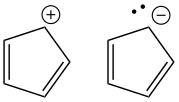
13. Use the polygon rule and draw the MO diagram for the cyclopentadienyl cation and cyclopentadienyl anion (including the pi electrons). a) Determine from the MO diagrams which is aromatic and which is anti-aromatic. b) Does this confirm what the 4N+2 rule would predict?
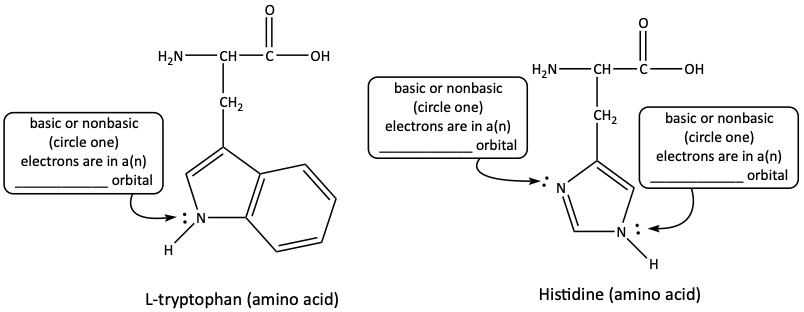
14. In the following amino acids, identify the indicated nitrogen atoms as basic or nonbasic. Also, identify the type of orbital that contains that nitrogen atom’s lone pair of electrons,
15. Use the polygon rule and draw the MO diagram for the cyclopropenyl cation and cyclopropenyl anion (including the pi electrons). a) Determine from the MO diagrams which is aromatic and which is anti-aromatic. b) Does this confirm what the 4N+2 rule would predict?
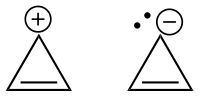
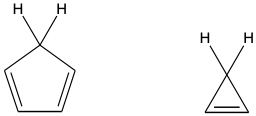
16. Which of the two following compounds is the most acidic and why? Hint: As always, think about the stability of the conjugate base that is formed.
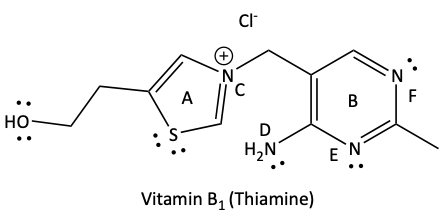
20.17 Vitamin B1, thiamine, is shown below. Identify whether rings A and B are aromatic, nonaromatic, or antiaromatic. Then, identify whether the nitrogen amines (C-F) are basic or nonbasic.