8.4 Finding Electrophilic Sites
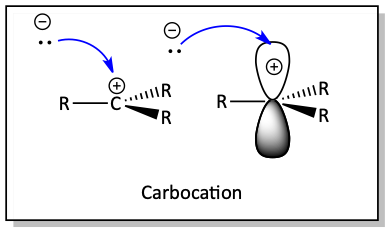
The first and most obvious electrophiles are atoms with a positive charge explicitly written on them. A carbocation (positively charged cation on a carbon atom) is a prime example. Carbocations have a carbon atom with three bonds and an empty p orbital.
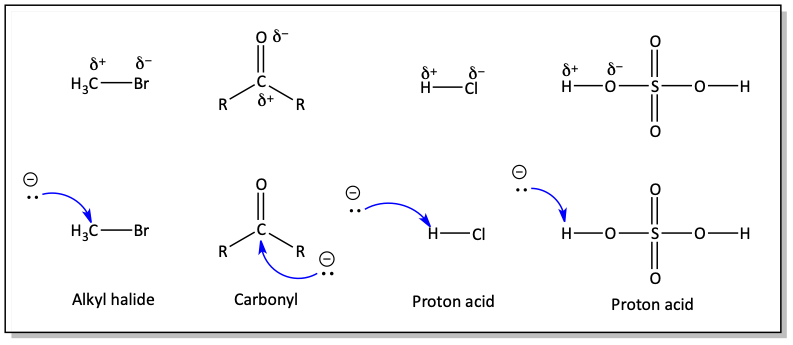
Other sources of atoms with a positive formal charge, which may seem “hidden”, are the acids. Recall that acids are a source of protons, H+. So, HCl, H2SO4, H3PO4 are all sources of the electrophilic H+.If a carbon or hydrogen is attached to a more electronegative atom, the carbon or hydrogen atom has a partially positive charge. Alkyl halides, carbonyls, and proton acids are also electrophiles.
You may remember from general chemistry the strange chemical behavior of boron (B) and aluminum (Al). They are atoms that are electron deficient because they normally have six electrons in their Lewis structures. They have an incomplete octet. The B and Al atoms contain a partial positive charge because they normally lack negative electron density around them.
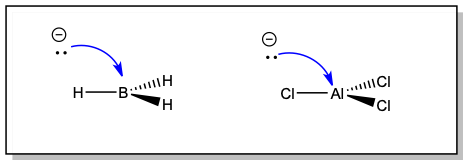
To summarize how to find positively charged electrophilic sites, look for the following.
1. Atoms with a formal positive charge written on them.
a. Sometimes the positive formal charge is written right on the atom. Hooray for those times!
b. Strong acids are a source of H+.
c. If you cannot find a positive formal charge, it might help to draw valid resonance forms until you find some good sites.
2. Atoms attached to electronegative elements.
3. Al or B atoms
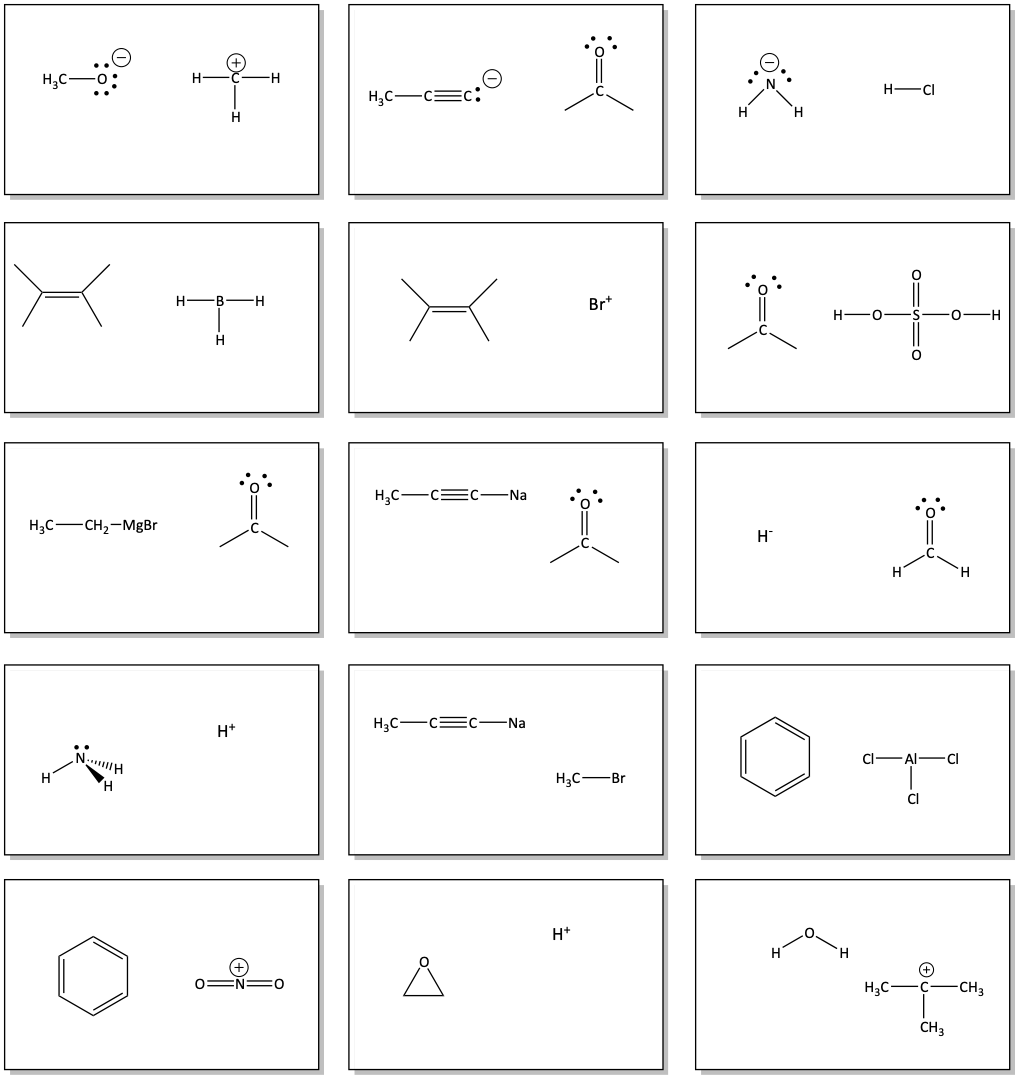
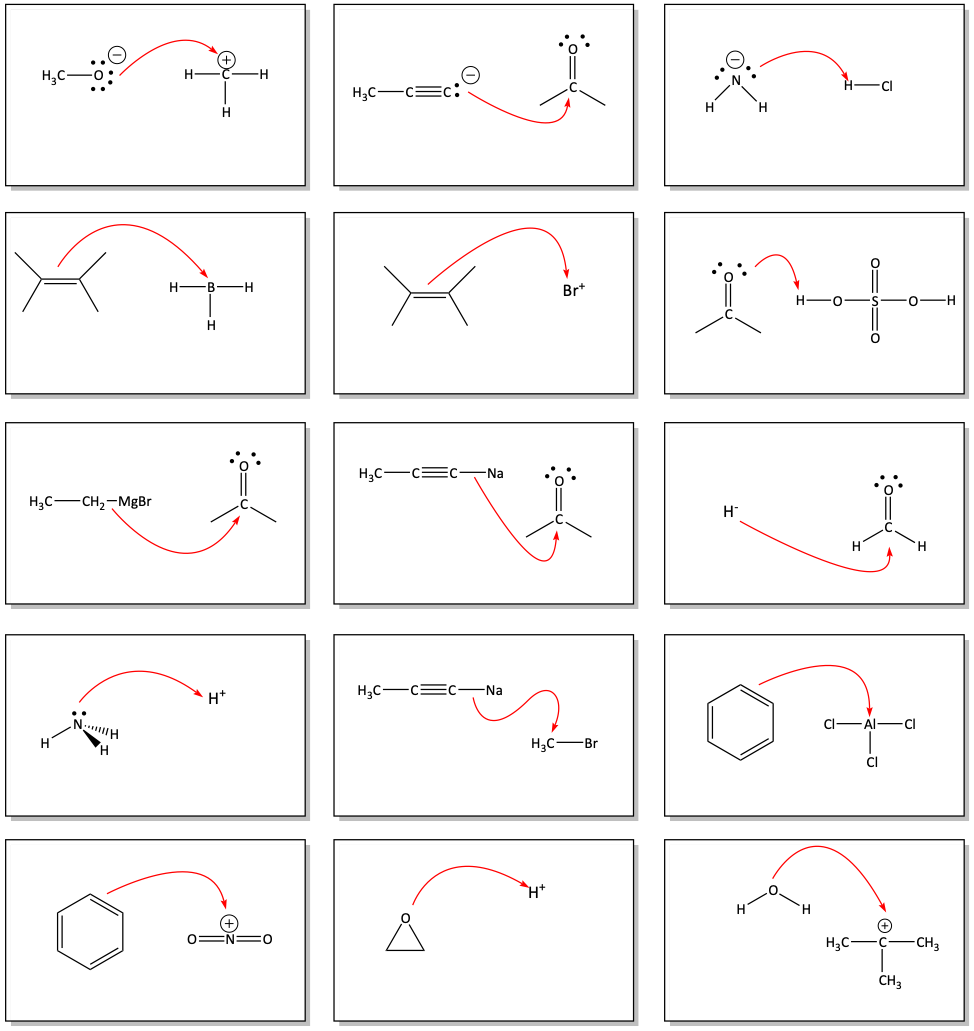
6. Draw an arrow from the negative electrons to the most positive spot (most electrophilic site) in the following molecules.
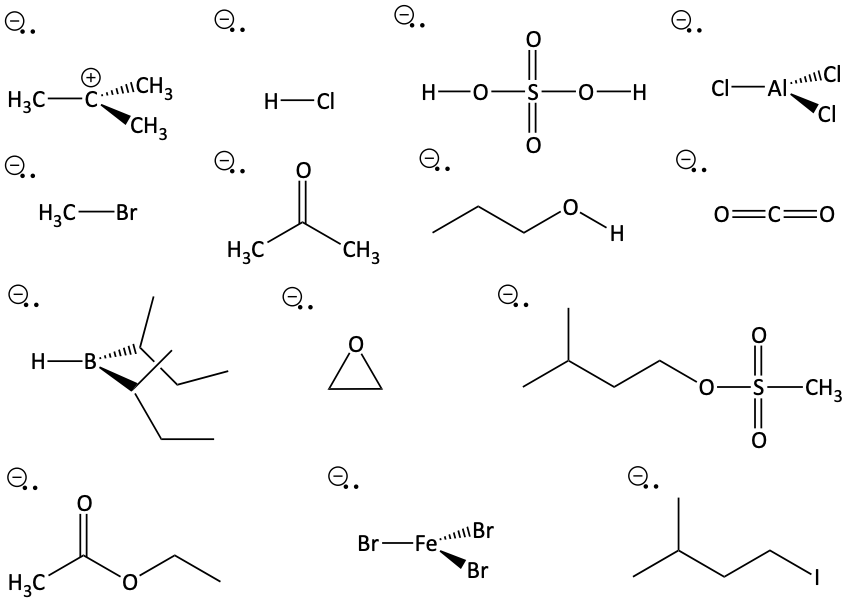
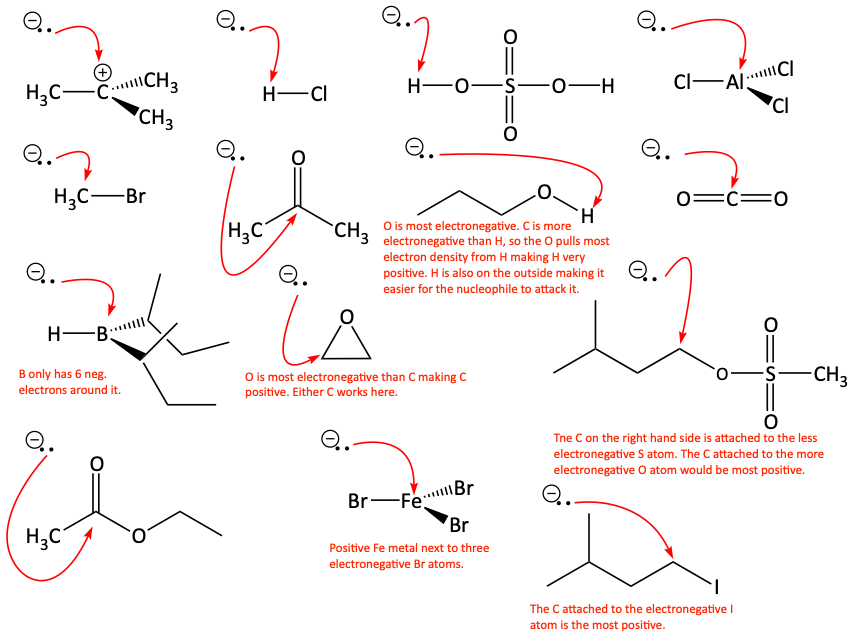
7. Draw arrows from the most negative, nucleophilic sites on one molecule on the left towards the most positive, electrophilic sites in the molecule on the right.