8.5 One arrow or more?
In the previous exercise, we drew one arrow from the nucleophile to the electrophile. This is an important first step for our mechanism. Only one arrow is drawn in each step unless it is necessary to draw more. If only one arrow is needed, then draw the product and move on to the next step of the mechanism. More arrows can be drawn in subsequent steps, but for goodness sakes, draw only the necessary arrows in each step! The second step of arrow drawing is learning whether a second arrow or more is needed. One common mistake of novice organic chemistry students is drawing too many arrows for no reason. A mechanism is a step-by-step story. There are two reasons to draw more arrows. One reason to draw more than one arrow is if you know that the reaction is concerted (that two or more things happen at the same time). If two things happen in the same step, they should be drawn in the same step. If two things happen sequentially, one after the other, they should be drawn in two steps, one after the other. Another reason to draw more arrows in one step is if after the first arrow has moved two electrons, an atom has more than an octet of electrons. For example, if an atom will have ten electrons, then some electrons need to be immediately removed in order to maintain an octet. In the following figure, after the first two electrons are moved, the atom receiving electrons has an octet, so no more arrows are needed. Notice, only one arrow is used.
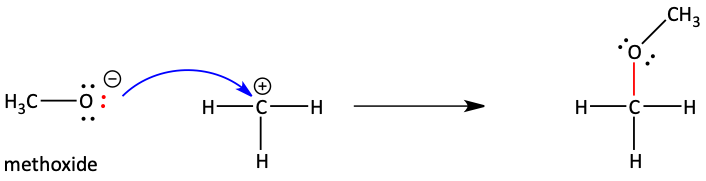
There are several things about the above mechanism that I want you to observe.
1. The arrow shows where the two red electrons moved. The electrons from the lone pair on the oxygen atom in the methoxide reactant move to become the bond between the carbon and oxygen atom in the product.
2. The carbon atom in the product has eight electrons around it (an octet). The carbon atom is happy, so only one arrow was required. If the carbon atom had more than eight electrons around it, some electrons would need to be removed with a second arrow.
3. Notice how the formal charges changed in the above reaction. The oxygen atom started with one bond and three lone pairs of electrons giving it a -1 formal charge. The carbon atom started with three bonds and no lone pairs of electrons giving it a +1 formal charge. After the oxygen atom donated two electrons to the carbon atom, we see in the product that both atoms have a normal bonding pattern. They have a zero formal charge in the product. How about the following reaction? Observe what the product looks like after one arrow has moved two electrons

Do you see a problem with the product? Of course, there are five bonds around a carbon atom! Ten electrons around the carbon atom break the octet rule. This molecule needs to get rid of two electrons from that carbon. A better mechanism would be the following with two arrows happening at the same time, a concerted mechanism.

Using this two-arrow, concerted, mechanism we avoid the unsavory 10-electron species from above. Now, the carbon atom in the product only has its octet. So, a rule to follow is that if electrons are coming to an electrophile and it makes more electrons than an octet at an atom, then electrons MUST move away from this atom. If this is not the case, use only one arrow. A similar situation occurs with acids. Consider what the following reaction looks like after one arrow has moved two electrons.
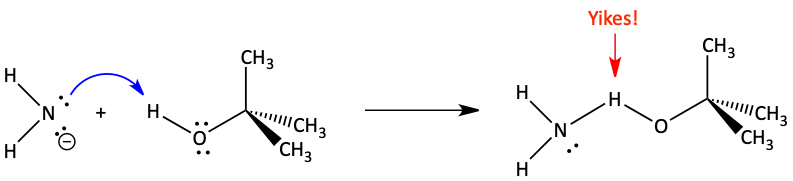
Do you see the problem? A hydrogen atom with two bonds in organic chemistry is not going to happen. Let’s please have only one bond for every hydrogen atom. In order to avoid a situation like this, we again need two arrows.

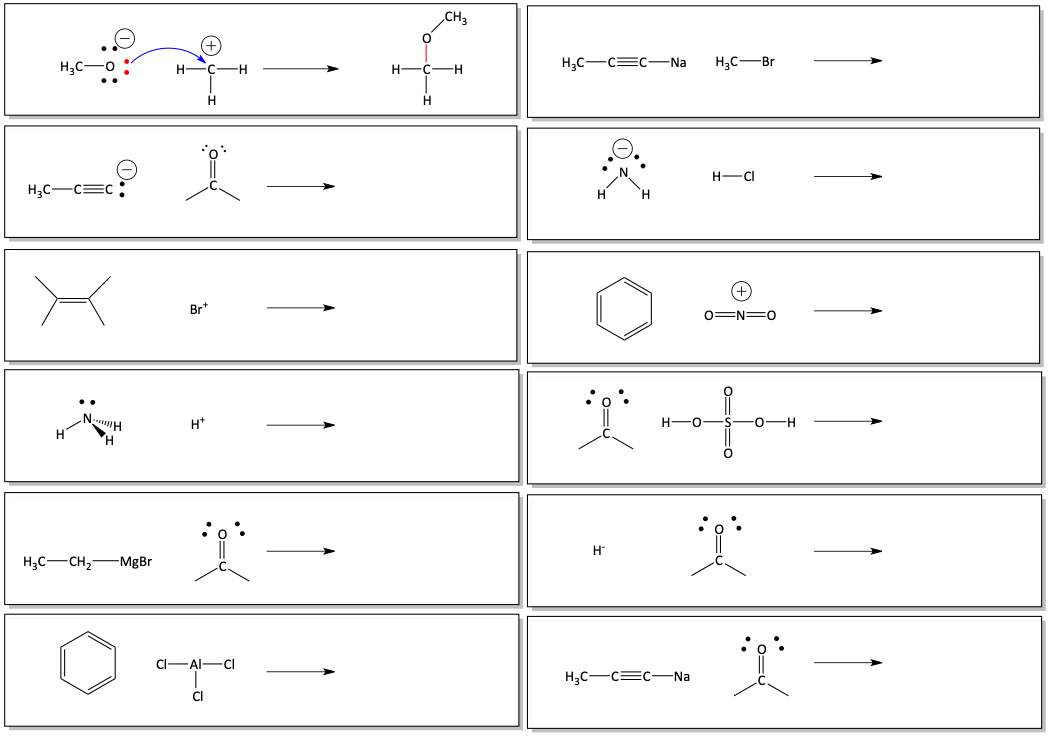
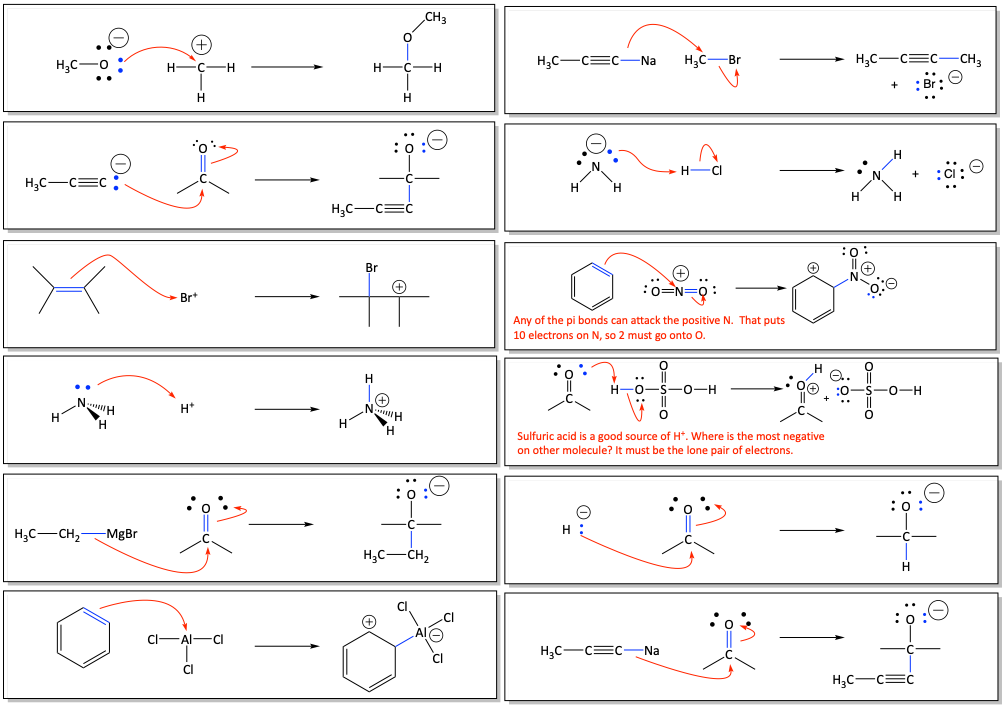
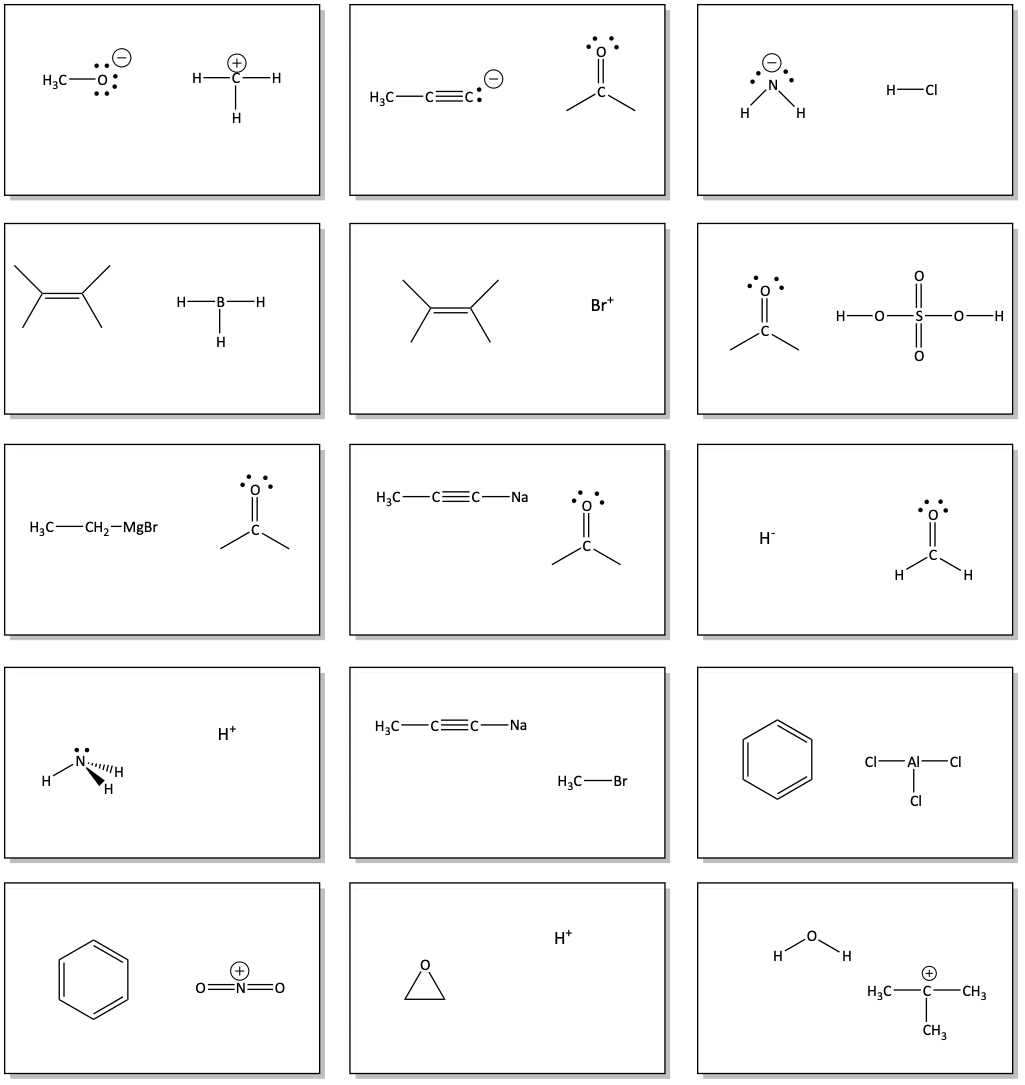
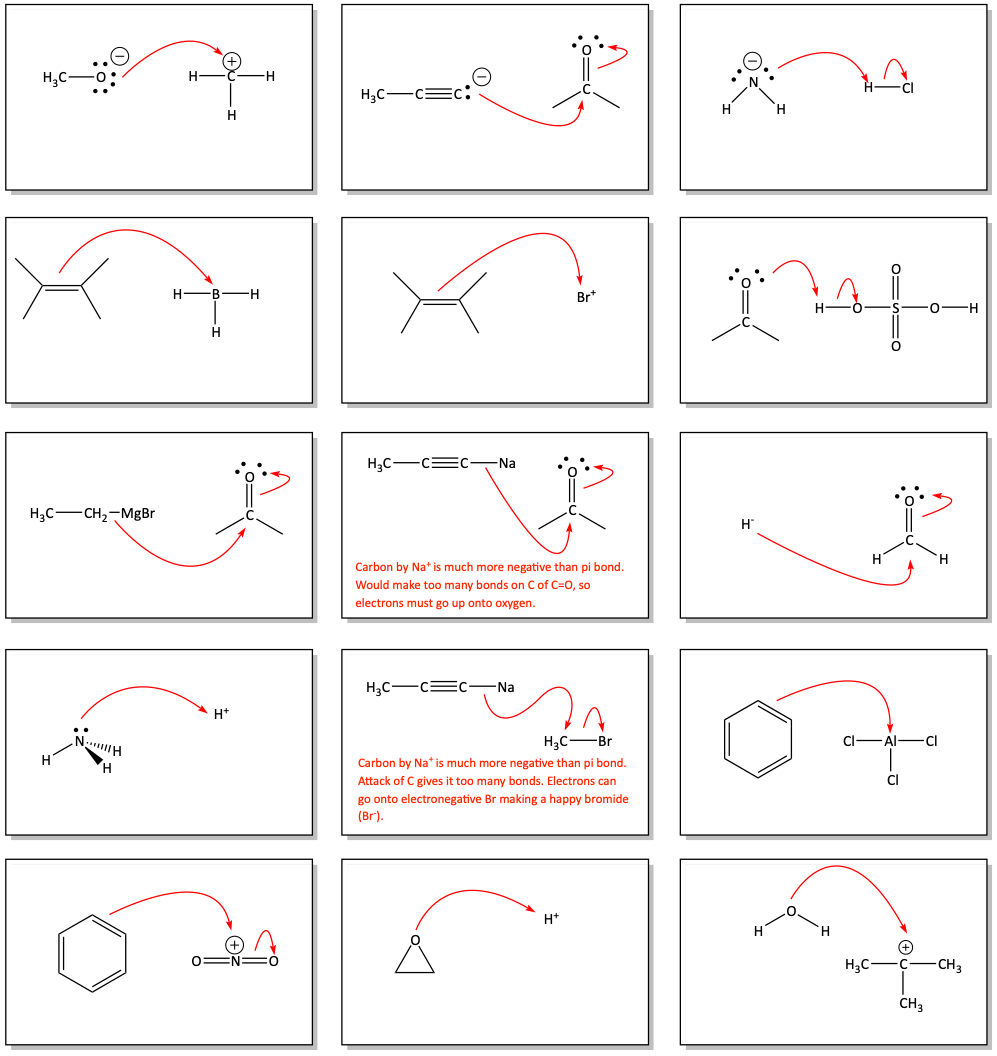
8. Draw in either one or two arrows, as appropriate, to complete the mechanism.
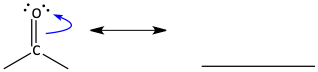
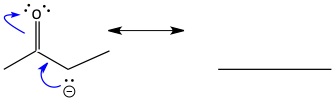
9. Draw in the product or resonance form that is made after pushing the electrons that the arrows show. It is recommended that you draw in all lone pairs of electrons and hydrogen atoms near where the arrows are. This will help you identify formal charges in the products.




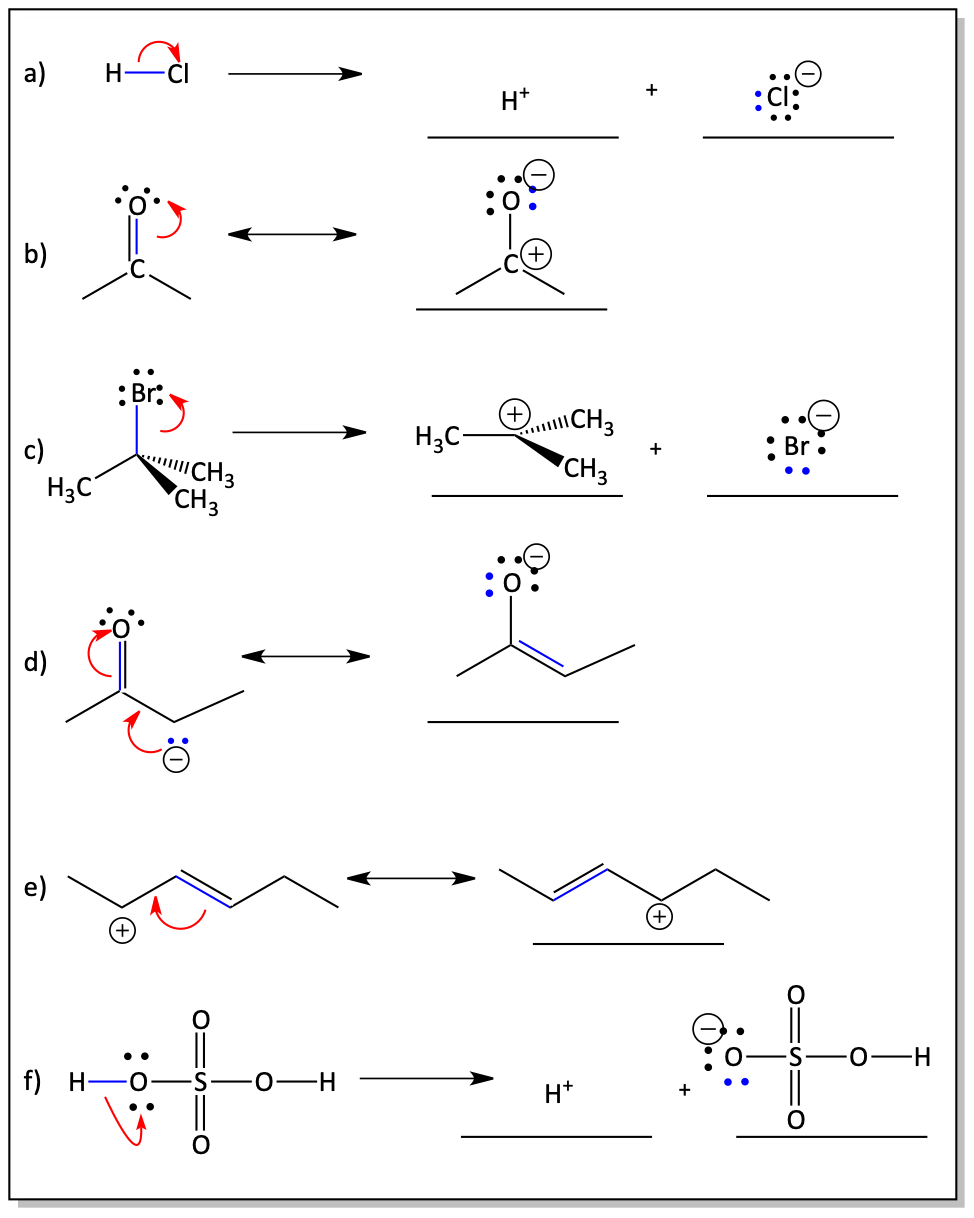
10. Let’s put it all together. This time, draw the mechanism arrow(s) as well as the product that is formed.