15.1 Introduction
The ether functional group is singly bonded carbon-to-oxygen-to-carbon. The oxygen atom is sp3 hybridized because it contains two single bonds and two lone pairs of electrons.

Ethers are common solvents in the chemistry lab. Two of the more common ether solvents are ethyl ether (also called diethyl ether or ether) and THF (tetrahydrofuran). Ethers are good at dissolving both polar and nonpolar compounds. Because there is no hydrogen atom on the oxygen atom, ether molecules do not hydrogen bond to each other. Therefore, they have fairly low boiling points. This makes a good solvent because when the reaction is complete, the ether solvent can be easily removed by distillation. DME and dioxane are water soluble. They are good solvents because they can be removed from an organic product at the conclusion of a reaction by simply washing with water.

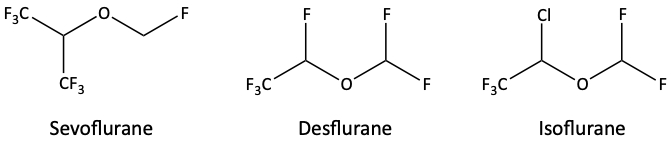
Ethers are also used as anesthetics. In 1846, Boston dentist William Morton demonstrated that ethyl ether can be used to painlessly extract the teeth of patients. Ethyl ether is also very flammable, which caused quite a problem in the days before electric lights! Ethyl ether also made patients quite nauseous. Today, halogenated ethers are commonly used as general anesthetics.
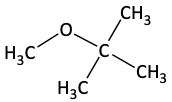
Methyl tert-butyl ether, MTBE, is used as an oxygenate in gasoline fuel. It increases the octane rating of the fuel and works as an anti-knocking agent. MTBE is now banned in gasoline by many states because it has found its way into drinking water.
15.1.1 Crown ethers
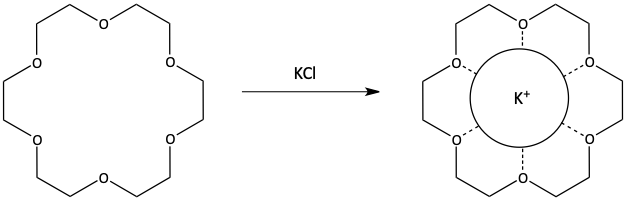
Crown ethers are cyclic ethers. They are a special subset of ethers. The many oxygen atoms with their lone pairs of electrons make crown ethers especially good at binding to positive cations.