17.2.1 Deprotonation of Carboxylic Acid
Carboxylic acids are fairly acidic. A carboxylic acid can be deprotonated to form a carboxylate. This is because the conjugate base is quite stable. The negatively charged oxygen atom can be further stabilized through resonance.
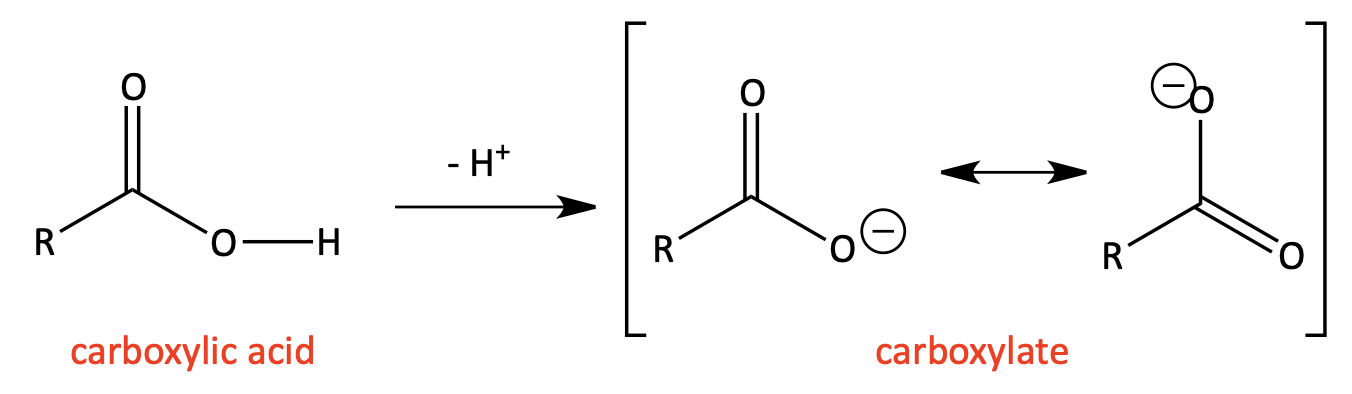
Since the carboxylates are so stable, carboxylic acids have a pKa around 5. Regular alcohols have a pKa of around 17. This makes carboxylic acids 1,000,000,000,000 (1 trillion or 1012) times more acidic than alcohols.
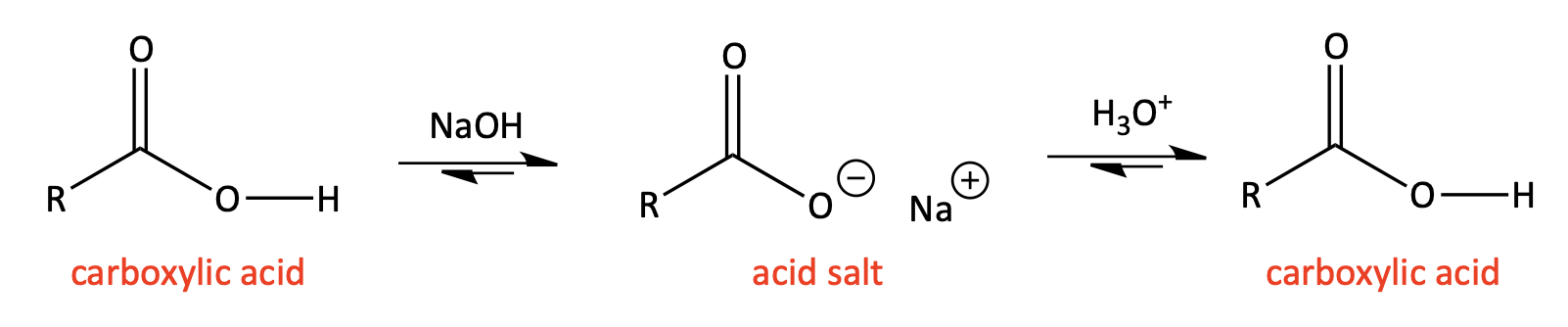
Therefore, carboxylic acids react with bases to make carboxylate salts. For example, when carboxylic acids react with sodium hydroxide, or a very weak base like sodium bicarbonate (NaHCO3) for that matter, they make the sodium salt of a carboxylic acid. These acid salts are water-soluble. Then, if the solution is acidified, the carboxylic acid can be reformed.