9.2 Nomenclature
9.2.1 Trivial Names
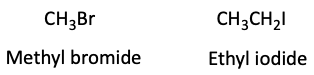
There are some trivial names for organohalides. The common name typically takes the form of “alkyl halide”.
Some halogenated solvents are very common solvents used in the organic chemistry lab. Methylene chloride (or dichloromethane) is a very common solvent. At one time, methylene chloride was used to decaffeinate coffee. There were concerns that traces of it remaining in the coffee might cause cancer. This fear was largely unfounded as evidenced by animal studies. But, methylene chloride did extract some of the compounds that add to the wonderful taste and flavor of coffee. For these reasons, coffee is now decaffeinated using liquid carbon dioxide, so drink up. Methylene chloride is still often used in the organic chemistry lab as a solvent. Chloroform is also often used in the organic lab and it was used industrially as a degreaser. It is more toxic than methylene chloride and a stronger carcinogen. It was also used historically as an anesthetic. Today, Halothane, CF3CHClBr is used as a general anesthetic because it is less toxic. Carbon tetrachloride is an excellent spot remover and was used as the primary dry-cleaning solvent for many years. Again, it is toxic and a carcinogen so the less harmful 1,1,1-trichloroethane has replaced it.

9.2.2 IUPAC Nomenclature
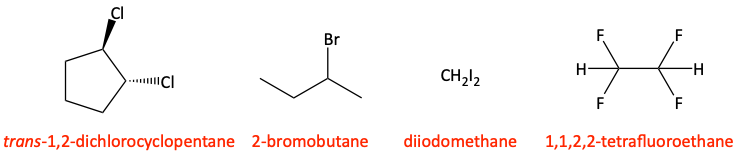
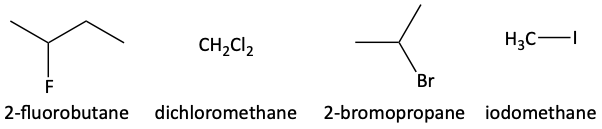
The IUPAC system used the prefixes fluoro-, chloro-, bromo-, and iodo- followed by the alkane name to name alkyl halides.
9.2.3 Dihalides
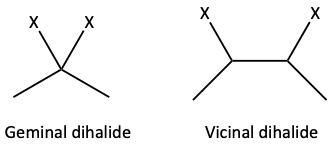
If two halides are on the same carbon atom of a molecule, the molecule is a geminal dihalide. If two halides are on neighboring carbon atoms of a molecule, the molecule is a vicinal dihalide.
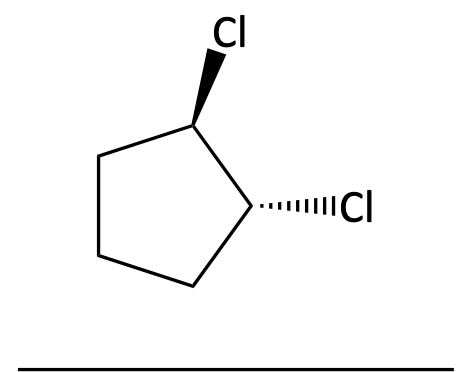
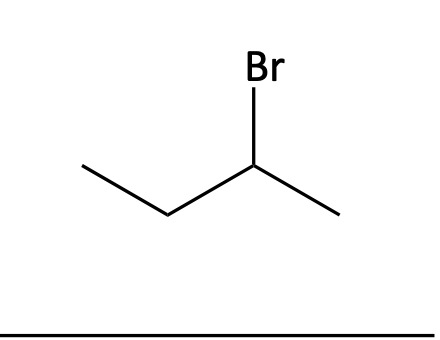
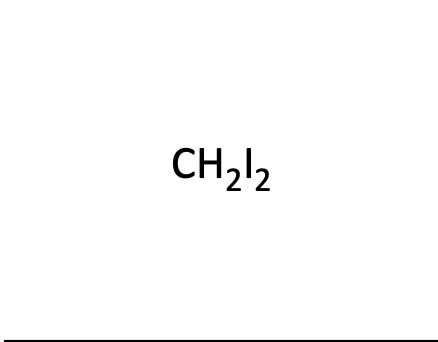
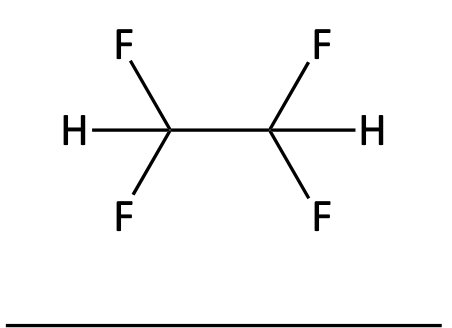
1. Name the following compounds using IUPAC nomenclature.