10.7 Extra Problems
11. Determine the degrees of unsaturation for each of the following formulas. Then, draw two possible structures for each formula. a) C5H8O
b) C4H9N
c) C6H10
d) C5H5Cl
e) C4H8
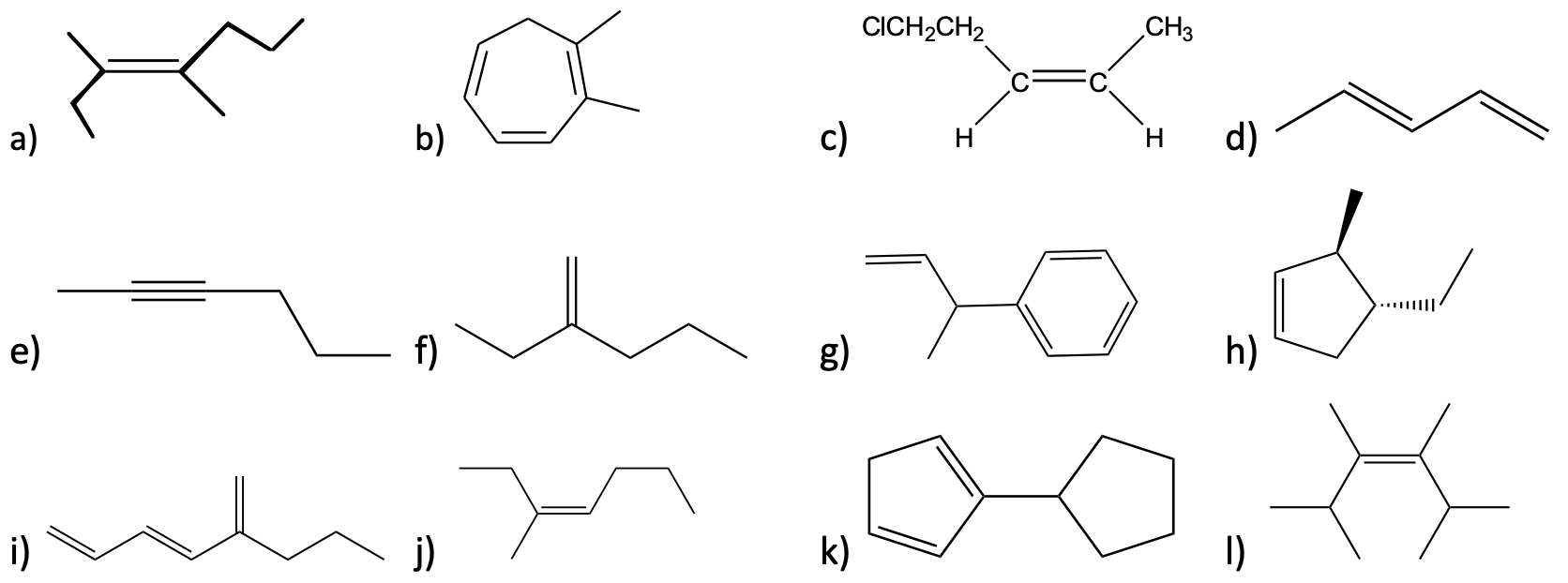
12. Label the following compounds as E, Z, or neither.

13. Name the following compounds. Do not forget cis-, trans-, E-, or Z- when appropriate.
14. Draw the following compounds. a) 4-phenyl-1-butene b) 3-heptyne c) acetylene d) polyethylene e) (E)-4- methyl-2-pentene f) 2-phenyl-1,3-cyclopentadiene g) ethylene h) polypropylene i) (3E, 5Z)-2-methyl-3,5-nonadiene j) cis-3,4-dibromo-3-hexene k) (2E,4E)-octadien-6-yne l) methylacetylene m) cyclohepta-1,3-diene n) cis-3,4-dimethyl-1-cyclopentene o) 2,4-dimethylcyclopentadiene p) 1-cyclohexyl-1,3,5-cycloheptatriene
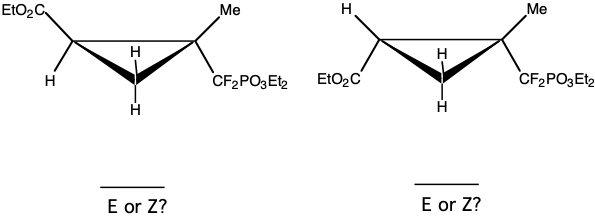
15. Compounds don’t necessarily need a double bond to have E and Z, you just need geometric isomers (like if they contain rings). Label the following as E or Z.
16. Components of the sex pheromone of the leopard moth have been synthesized. They are A and B, shown below.
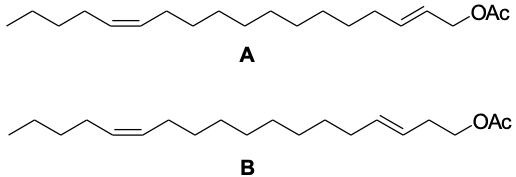
Complete the names for A and B. A is ( , )-2,13-octadecadienyl acetate. B is ( , )-3,13-ocdecadienyl acetate.
17. For the following compounds, identify if they have cis-trans isomerism. If they do, draw all of the cis/trans or E/Z isomers. Label them cis, trans, E, or Z. a) 2-methyl-2-butene b) 2-pentene c) 1,3-pentadiene d) 2,3-dichloro-2-butene e) 1-butene f) 1-chloro-1-fluoropropene g) 1-bromo-1-chloro-2-methylpropene h) 2-bromo-1-chloro-1-iodobutene
18. a) Draw the two elimination products formed in the following reaction and indicate which of the two products would predominate.
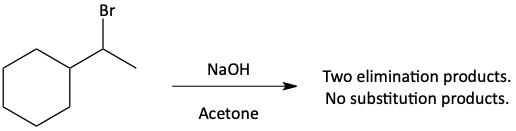
b) If KOtBu was used instead of NaOH, which of the two elimination products would predominate?
19. Draw the products of the following reactions.

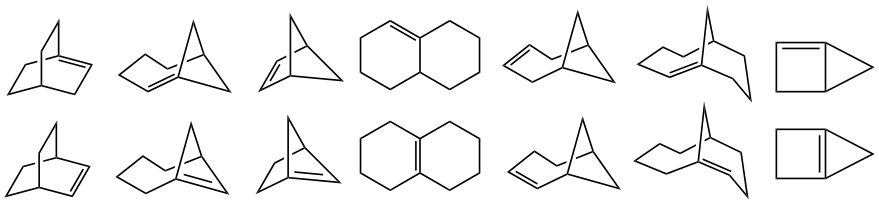
20. Indicate whether or not the following violate Bredt’s rule.
21. Fill in appropriate reagents that would perform the following reactions. a) 1,2-dibromopentane to pentene b) 1-butene to 1,3-butadiene (2 reactions) c)
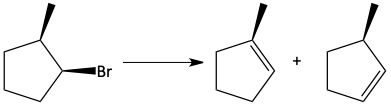
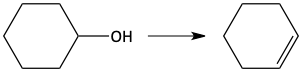
22. Propose a mechanism for the following reactions.
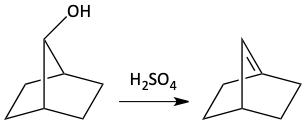
23. The following dehydration does not occur. Explain why.
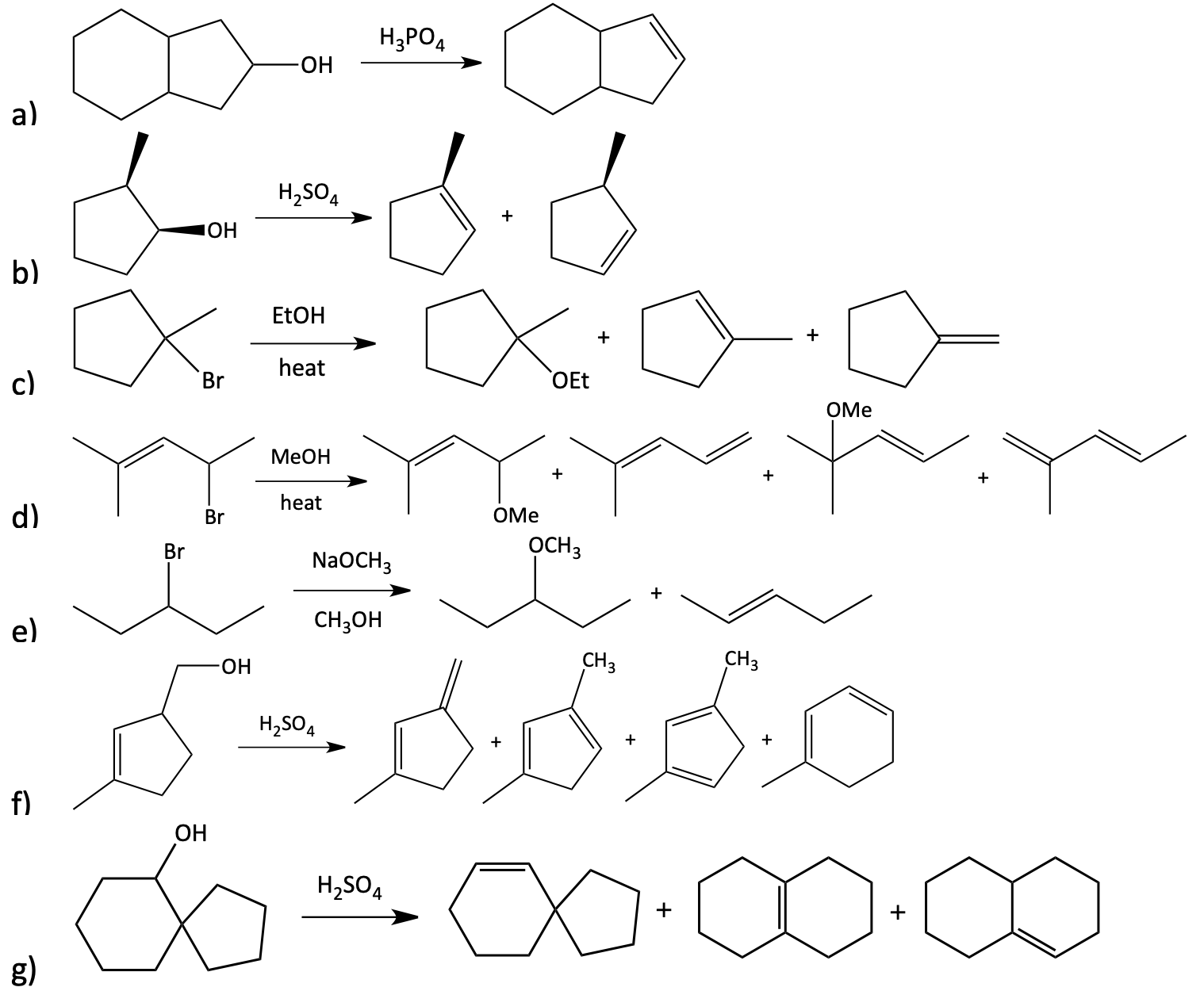
24. Predict the products of the following reactions. If more than one alkene is formed, identify the one that would be made in the greatest amount.
