5.5 Extra Problems
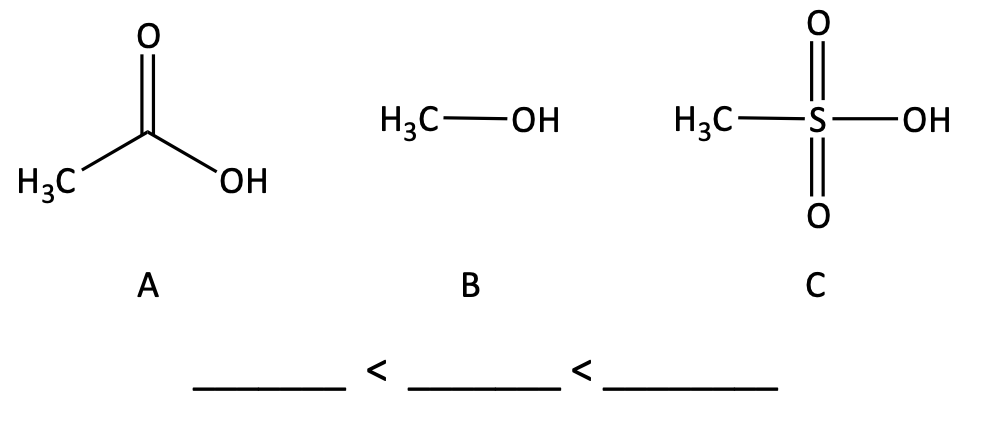
12. Rank the relative acidity for the following compounds. Put the most acidic on the right.
13. Consider the set of compounds, NH3, HF, and H2O. Rank these compounds in order of increasing acidity.
14. Circle the more acidic compound out of each pair of compounds below.

15. Circle the stronger base in each of the following pairs. a) I- vs. Cl-
b) H2O vs. HO-
c) HO- vs. H2N-
d) CH3COO- vs. HO-
e) H2N- vs. CH3COO-
16. Rank the following from least to most acidic.

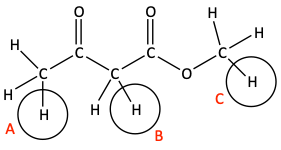
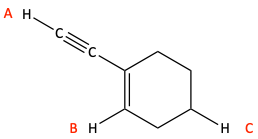
17. Rank the following circled protons from least to most acidic.
18. Rank the following compounds from least to most acidic.
BrCH2OH vs. CH3NH2 vs. CH3OH
19. Rank the following protons from least to most acidic.
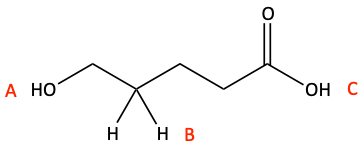
20. Rank the following protons from least to most acidic.
21. Which molecule (nitric acid or sulfuric acid) plays the role of acid in this reaction?

22. Which is the strongest base?

23. Imidazole is a ring that contains two nitrogen atoms. One of the nitrogen atoms is much more basic than the other. There are a couple of ways to explain this, but we will focus in this problem on using resonance.
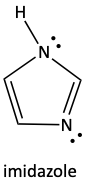
a) Draw structures of the two conjugate acids that are formed when each of the nitrogen atoms is protonated (the lone pair of electrons on the nitrogen atom reacts with H+). b) If possible, draw good resonance forms for each of these conjugate acids. Remember; do not break the octet rule for the nitrogen atoms. c) If a resonance form can be drawn, the positive charge can be spread out over more than one atom. This makes that conjugate acid more stable and its nitrogen atom more basic. Which nitrogen atom of imidazole is more basic?
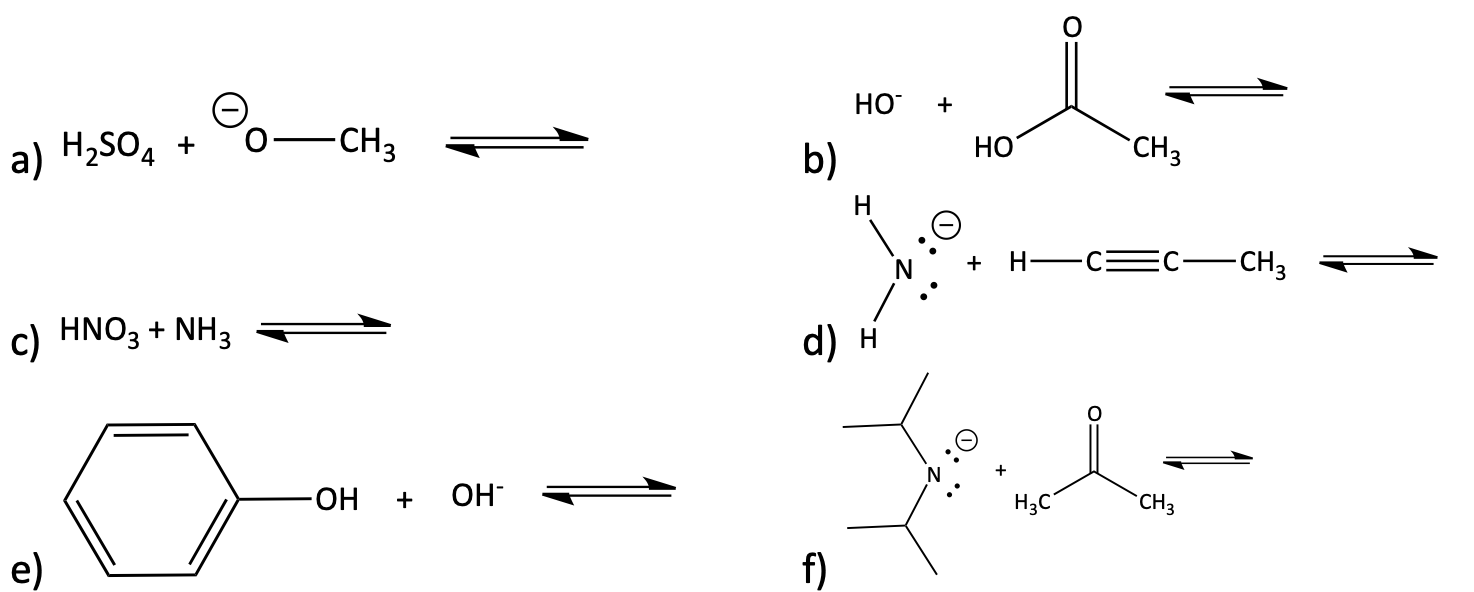
24. Predict the products of the following acid/base reactions.