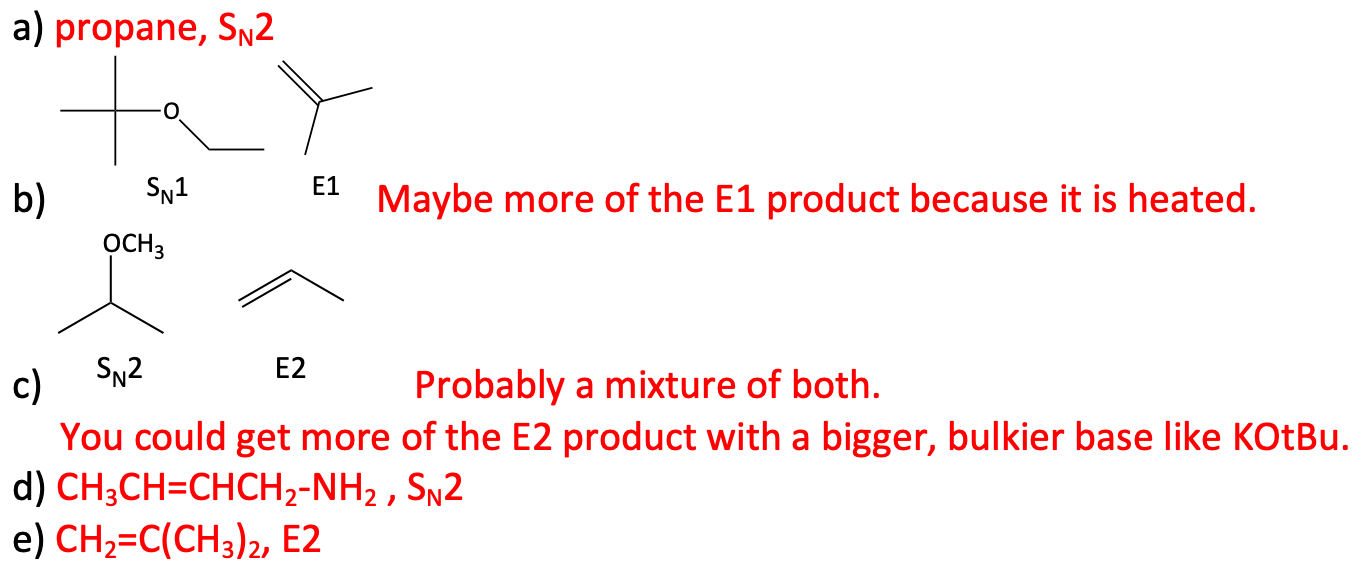
Comparison Summary
Do not memorize this chart. But, you can self-test yourself by making sure you understand why each of these is the way they are. Again, do not memorize, but develop a deep understanding of the underlying principles.
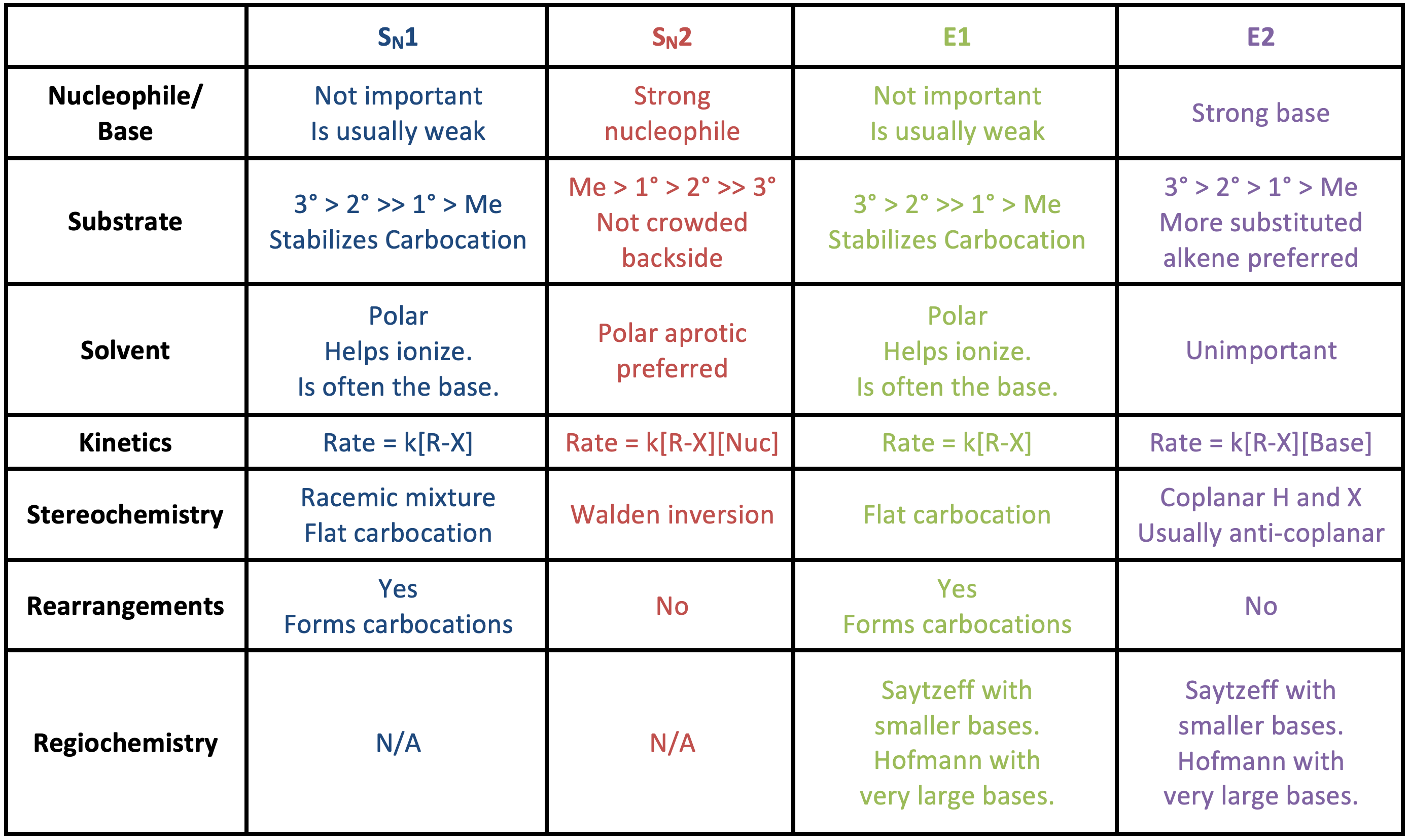
20. Explain the following observation.:
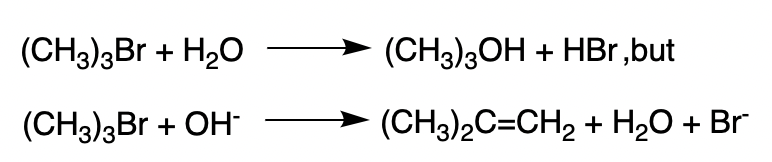
21. Indicate the products of the following reactions and indicate whether the mechanism is SN1, SN2, E1, or E2.a) propyl bromide + LiAlH4b) tert-butyl bromide + ethanol (CH3CH2OH) heated to 60°C.c) CH3CHBrCH3 + NaOCH3 in CH3OHd) CH3CH=CHCH2Cl + NaNH2e) (CH3)3CBr + KOtBu
20. The first reaction goes SN1. The water is a bad nucleophile and will wait around for the tertiary carbocation to form, then SN1. Hydroxide is an aggressive nucleophile/base. It cannot SN2 because the substrate is tertiary. It will then act like a base and do an E2 because it is not going to wait around for a carbocation to form.
21.